
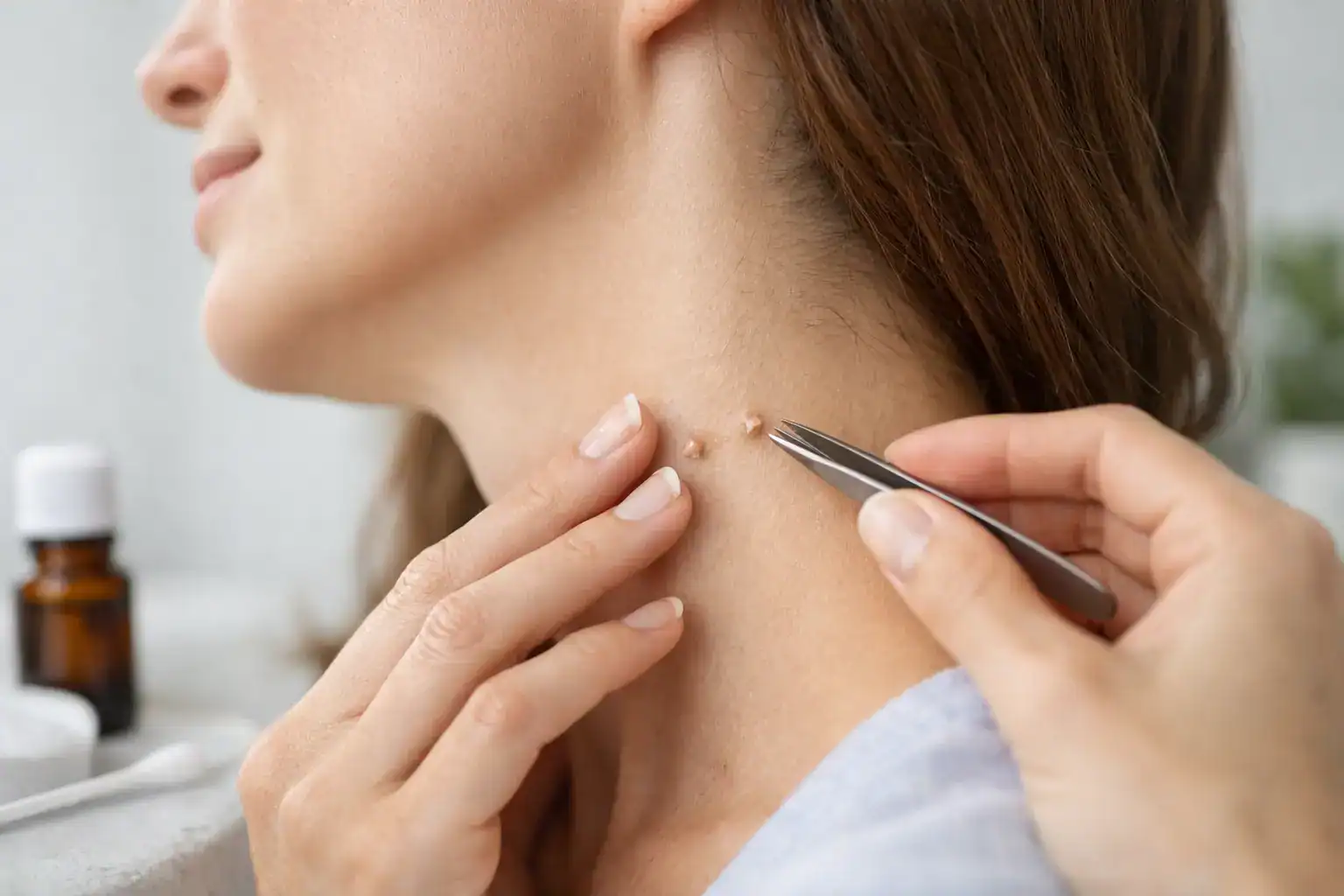
A skin tag can seem minor until it catches on a necklace, rubs under a bra strap, or starts bothering you every time you shave. If you are searching for how to remove skin tags, the first step is making sure that the bump is actually a skin tag and not something that needs medical attention.
Skin tags are common, soft growths that often appear in areas where skin rubs together, such as the neck, underarms, eyelids, groin, and beneath the breasts. They are usually harmless, but that does not mean every raised spot should be treated at home. A dermatologist can tell the difference between a benign skin tag and a wart, mole, cyst, or another growth that may need a different approach.
How to remove skin tags without making things worse
Most skin tags can be removed quickly and safely in a medical office. The main reason patients run into trouble is not the tag itself – it is treating the wrong lesion or trying a method that causes bleeding, infection, or scarring.
A true skin tag is typically flesh-colored or slightly darker, soft, and attached to the skin by a narrow stalk. They may stay small or grow over time. Friction, genetics, weight changes, and age can all play a role. Some people develop only one or two, while others get clusters.
Even when a spot looks straightforward, location matters. A tiny growth on the eyelid is very different from one on the torso. Areas with thinner skin, more blood vessels, or higher visibility deserve more caution. That is why the safest answer to how to remove skin tags is often simpler than people expect: have them evaluated and removed by a dermatologist.
When not to remove a growth at home
There are a few signs that should pause any do-it-yourself plan. If the lesion is darkly pigmented, rapidly changing, painful, crusted, bleeding without being irritated, or unusually large, it should be examined before removal. The same is true if you are not certain it is a skin tag.
Skin cancer does not usually look like a classic skin tag, but not every suspicious growth follows a textbook pattern. Warts, irritated moles, seborrheic keratoses, and other benign lesions can also be confused with skin tags. Removing a bump without a diagnosis can delay proper treatment.
People with diabetes, circulation issues, bleeding disorders, or a history of keloid scarring should be especially careful. If a growth is on the eyelid, genitals, or another sensitive area, home removal is not worth the risk.
Dermatologist treatment is usually fast and precise
In-office removal is typically straightforward. After examining the lesion, a dermatologist may remove it by snipping it off with sterile instruments, freezing it with liquid nitrogen, or using electrocautery to carefully destroy the tissue. The best method depends on the size of the tag, where it is located, and whether there is any question about the diagnosis.
For many patients, the appointment is brief. Some removals require little or no downtime, and discomfort is usually minimal. If the tag is larger or in a sensitive area, local numbing may be used.
The value of professional treatment is not only convenience. It also reduces the chances of incomplete removal, unnecessary trauma to the surrounding skin, and avoidable scarring. If there is any reason to suspect the lesion is not a typical skin tag, the tissue can be sent for evaluation.
Home skin tag removal methods: what patients should know
A lot of over-the-counter products promise an easy fix. Some use freezing agents, while others rely on bands or patches meant to cut off blood flow. On paper, these may sound reasonable. In practice, results are mixed.
The biggest problem is accuracy. Home freezing products are not as controlled as office-based cryotherapy, and it is easy to affect the surrounding skin. Banding methods may work for very small tags in low-risk areas, but they can also cause pain, irritation, swelling, and partial detachment that leaves the area inflamed.
Cutting off a skin tag at home with scissors or nail clippers is one of the riskiest approaches. Even a small tag can bleed more than expected. If tools are not sterile or aftercare is poor, infection becomes a real concern. There is also a higher chance of jagged removal and visible scarring.
Natural remedies are popular online, but that does not make them effective or safe. Tea tree oil, apple cider vinegar, and similar treatments can irritate or burn the skin. They may also prolong the process without actually resolving the growth.
What to expect after skin tag removal
After professional removal, the area may look pink or slightly irritated for a short time. Smaller sites often heal quickly. Your dermatologist may recommend keeping the area clean, applying a thin layer of ointment, and avoiding friction while it heals.
If the lesion was removed from an area that rubs, such as the underarm or groin, healing may take a little longer simply because of movement and moisture. Most patients do well with simple wound care.
Scarring is usually minimal, but it depends on the removal method, the size of the tag, and your skin’s healing pattern. People who scar easily should mention that before treatment so the approach can be tailored appropriately.
Will skin tags grow back?
A removed skin tag usually does not return in the exact same spot if it was fully treated. However, that does not prevent new skin tags from forming elsewhere. Patients who are prone to them may continue to develop new ones over time, especially in high-friction areas.
That can be frustrating, but it is not unusual. Skin tags are common and often related to skin rubbing, body changes, and inherited tendency. If you keep getting them, it may help to talk with a dermatologist about patterns you are noticing and whether any preventive steps make sense for your skin.
How to remove skin tags on the neck, eyelids, and underarms
Different body areas call for different decisions. Neck skin tags are among the most common because collars, jewelry, and skin folds create friction. They are often easy to remove in the office, but they may bleed if pulled or cut at home.
Eyelid skin tags should be handled with particular care. The skin is thin, the area is delicate, and the margin for error is small. What looks like a skin tag near the eye can also turn out to be another type of lesion. This is one area where self-treatment is especially unwise.
Underarm skin tags are also common, but the area stays warm and moist, which can increase irritation after a home attempt. Shaving and deodorant use can make things worse. A clean, precise office procedure is usually the more reliable option.
Why diagnosis matters more than most people think
The internet tends to frame skin tags as simple cosmetic nuisances. Often, they are. But dermatology is full of look-alikes. A growth that seems harmless to a patient can turn out to be something that should not be frozen, tied off, or clipped at home.
That is where specialist care makes a difference. A board-certified dermatologist is trained to assess texture, color, shape, attachment, and surrounding skin changes before deciding on treatment. If removal is appropriate, it can usually be done efficiently during the visit.
For busy families and working adults, that matters. You want the bump gone, but you also want the right answer the first time. That combination of convenience and clinical accuracy is often the best route, especially when a lesion is irritated, visible, or in a sensitive area.
If a skin tag is bothering you, getting larger, or simply getting in the way, there is no benefit in guessing. Professional evaluation can spare you the trial and error, and in many cases, treatment is quicker than living with the irritation any longer.