
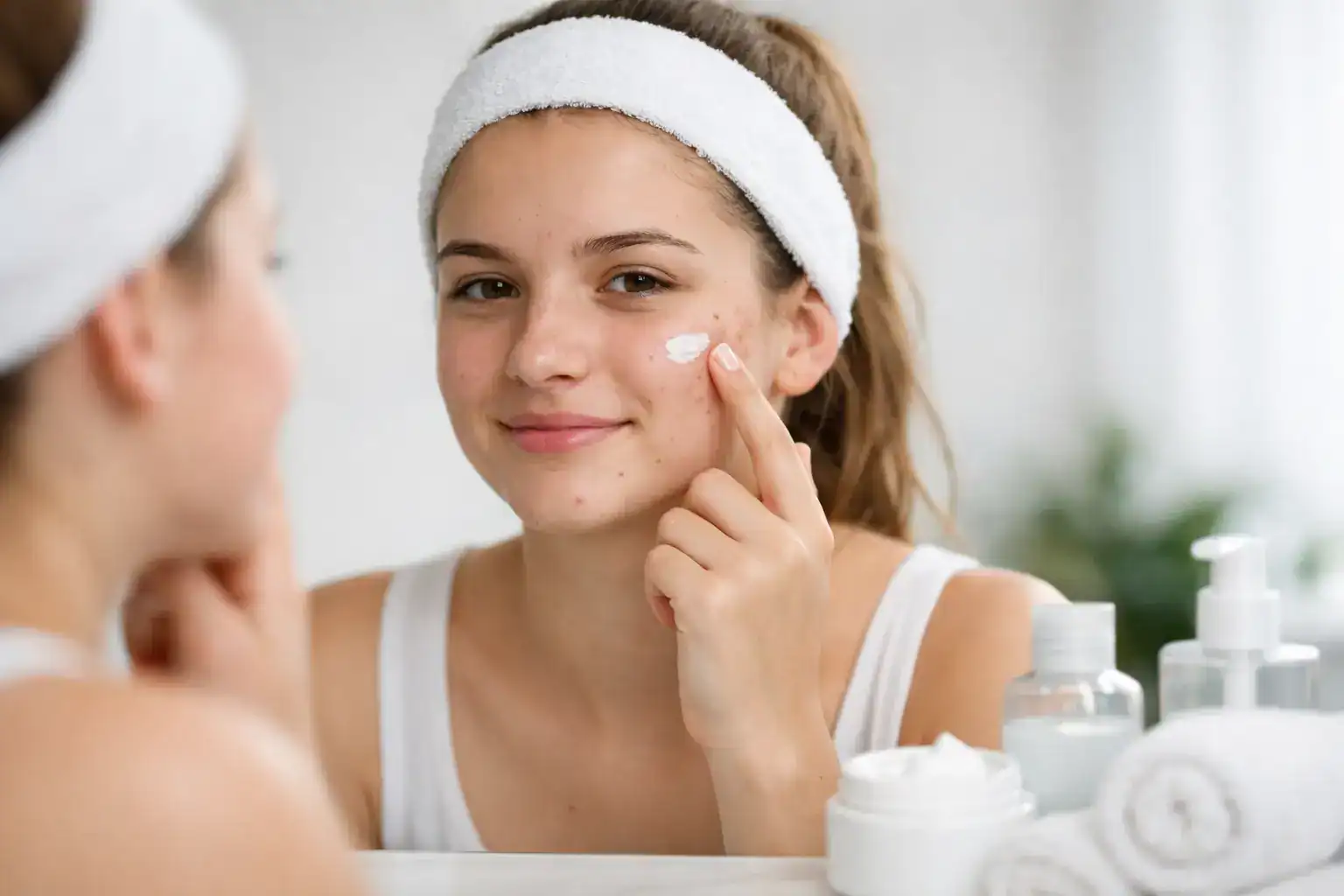
A bathroom counter full of acne products usually leads to the same result – irritated skin and very little progress. For most teens, the better approach is simpler and more consistent. A teen acne treatment routine works best when it targets oil, clogged pores, and inflammation without stripping the skin barrier.
Acne during the teen years is common, but that does not make it easy to live with. Breakouts can affect self-confidence, sports, school, and social life. The good news is that many teens improve with the right routine, and when acne is more stubborn, dermatology treatment can make a meaningful difference.
What a teen acne treatment routine should do
A good routine has a clear job. It should keep pores from clogging, reduce excess oil, calm inflamed pimples, and protect the skin from unnecessary irritation. That last point matters more than many families realize. Teens often assume that if one acne product helps, three or four stronger ones will work faster. In practice, over-treating the skin can cause redness, peeling, burning, and even more noticeable breakouts.
That is why an effective routine usually starts with a few core steps. Cleanse gently, apply an acne treatment with a proven active ingredient, use a non-comedogenic moisturizer, and wear sunscreen in the morning. Simple does not mean weak. It means the products are more likely to be used every day, which is what drives results.
Morning routine for teen acne
The morning routine should be quick enough to follow before school and effective enough to support treatment throughout the day. Start with a gentle cleanser. If the skin is oily, a cleanser with salicylic acid can help loosen dead skin cells and reduce clogged pores. If the skin is already dry or sensitive, a mild non-medicated cleanser is often the better choice.
After cleansing, apply acne medication if one has been recommended for morning use. Benzoyl peroxide is a common option because it helps reduce acne-causing bacteria and inflammation. Lower strengths are often easier to tolerate and can still work well. The goal is not to dry the skin out. The goal is steady control of breakouts.
Moisturizer comes next, even for oily skin. That surprises many teens and parents, but skipping moisturizer often backfires. When the skin becomes irritated or overly dry, treatment gets harder to tolerate. Look for an oil-free, non-comedogenic moisturizer that feels light on the skin.
Finish with sunscreen. This step is especially important if a teen is using retinoids, benzoyl peroxide, or other active treatments that can make skin more sun-sensitive. Sunscreen also helps prevent post-acne marks from becoming more noticeable and longer-lasting.
Night routine for teen acne treatment
The nighttime routine is where many acne plans do their heavy lifting. Wash the face again with a gentle cleanser to remove oil, sweat, sunscreen, and makeup. Scrubbing is not helpful. Acne is not caused by dirty skin, and rough cleansing can worsen inflammation.
After cleansing, many teens benefit from a topical retinoid at night. Retinoids help normalize skin cell turnover and prevent clogged pores, which makes them especially useful for blackheads, whiteheads, and long-term acne control. They can also help reduce the formation of new breakouts before they become inflamed.
Retinoids do require some patience. In the first few weeks, skin may feel dry or look mildly irritated. That does not always mean the treatment is wrong, but it may mean the routine needs adjustment. Using a pea-sized amount for the entire face, applying it every other night at first, and following with moisturizer can improve tolerability.
For teens who are not using a retinoid, a dermatologist may recommend a different evening treatment depending on the type and severity of acne. The right choice depends on whether breakouts are mostly clogged pores, inflamed bumps, hormonal flares, or deeper cystic lesions.
The ingredients that matter most
Many over-the-counter labels promise fast results, but only a few ingredients consistently earn a place in acne care. Salicylic acid helps exfoliate inside the pore and can be useful for oily skin and blackheads. Benzoyl peroxide reduces bacteria and inflammation, making it a strong option for red, tender pimples. Retinoids are among the most effective treatments for preventing clogged pores and supporting clearer skin over time.
Niacinamide can also be helpful in some routines because it supports the skin barrier and may reduce redness. On the other hand, heavily fragranced products, harsh scrubs, and alcohol-heavy toners are more likely to irritate than improve acne.
This is where balance matters. A teen with mild blackheads on the forehead may do well with salicylic acid and a retinoid. A teen with angry, inflamed breakouts on the cheeks may need benzoyl peroxide, prescription treatment, or oral medication. There is no single routine that fits every patient.
Common mistakes that make acne worse
The biggest mistake is inconsistency. Acne treatment usually takes several weeks to show improvement, and switching products every few days makes it hard to know what is helping. Picking or popping pimples is another common problem. It increases inflammation, raises the risk of scarring, and can leave dark marks that outlast the breakout itself.
Teens also run into trouble when they use products meant for adults with very resilient skin or social media trends that ignore skin type. Toothpaste, lemon juice, aggressive exfoliants, and layering too many acids can do real damage. Even acne patches have limits. They may help protect a surface blemish from picking, but they do not replace a full treatment plan.
Hair and sports habits can matter too. Pomades, heavy hair oils, tight helmets, sweaty headbands, and not showering after practice can contribute to breakouts along the forehead, hairline, chest, and back. Sometimes improving acne means looking beyond facial products alone.
When a teen acne treatment routine is not enough
If acne is leaving scars, causing pain, spreading to the chest and back, or not improving after two to three months of consistent care, it is time to see a dermatologist. Moderate to severe acne often needs prescription treatment, and earlier care can reduce the chance of permanent scarring.
Dermatologists can tailor treatment based on the pattern of acne, skin sensitivity, and the patient’s age. That may include prescription retinoids, topical antibiotics paired with benzoyl peroxide, hormonal treatment in appropriate patients, or oral medications for more significant acne. Some teens also need help with the marks acne leaves behind, especially in skin types that are more prone to hyperpigmentation.
This is one reason specialist care matters. Treating teen acne is not only about getting rid of active pimples. It is also about protecting the skin long term and choosing options that are safe, realistic, and appropriate for the individual patient. For busy families across North Georgia, having access to dermatology care close to home can make it much easier to stay on track with follow-up and adjustments.
How long does it take to see results?
Most teens need to give a routine at least six to eight weeks before judging whether it is working. Some treatments, especially retinoids, may take longer for fuller improvement. That delay can be frustrating, but it is normal. Acne forms below the skin before it appears on the surface, so today’s routine is partly treating tomorrow’s breakout.
If the skin is becoming very red, stinging intensely, or peeling to the point that products cannot be used, the routine likely needs to be simplified. More treatment is not always better treatment. Sometimes progress depends on using fewer actives more consistently.
Building a routine that a teen will actually follow
The best plan is one that fits real life. A teen who has five minutes in the morning before school probably needs a short, repeatable routine, not a ten-step system. A student athlete may need guidance on showering after workouts and choosing non-comedogenic sunscreen. A teen with sensitive skin may need a slower start and fewer active ingredients.
Parents can help by keeping expectations realistic. Acne usually improves in stages, not overnight. Clearer skin often comes from months of steady treatment, not one miracle product. Support matters, especially when a teen feels discouraged or embarrassed by breakouts.
A well-designed teen acne treatment routine should feel manageable, not punishing. When the products match the skin type, the acne pattern, and the teen’s daily schedule, treatment becomes much easier to stick with. And when acne is more persistent than expected, getting expert care early can spare a teen months of frustration and help protect both skin and confidence.