
Diagnóstico del cáncer de piel
El diagnóstico precoz del cáncer de piel puede marcar una gran diferencia en el proceso de tratamiento. Recurrimos a la información al paciente y a diversas técnicas de diagnóstico para detectar el cáncer de piel lo antes posible.
How Is Skin Cancer Diagnosed?
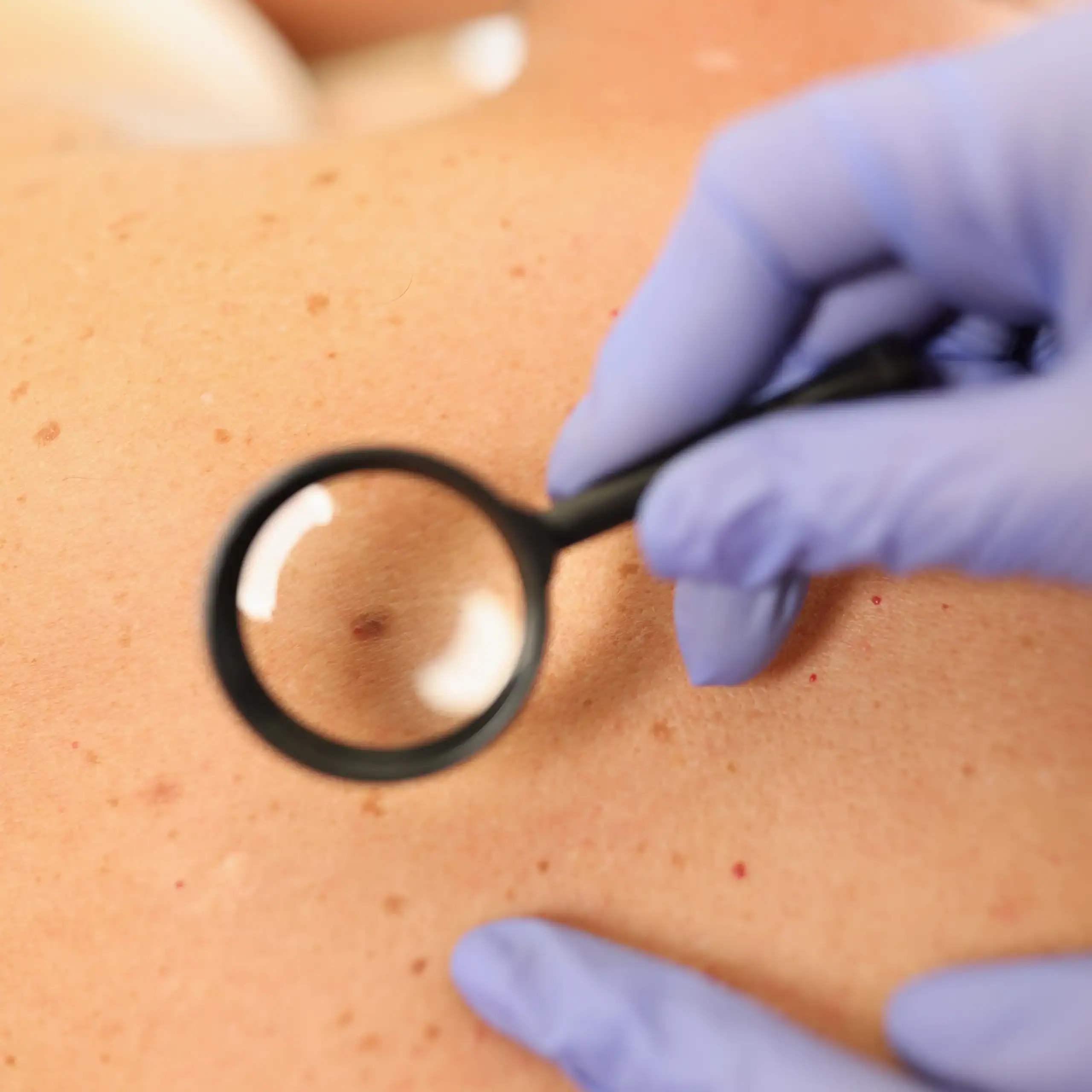
The skin cancer diagnosis process begins with the discovery of an abnormal growth on the skin. This may be something that a patient discovers during regular self-examinations, or it may be something that we discover during an annual full-body skin exam. In any case, part of the skin growth will be surgically removed and examined in our lab.
This process is referred to as a biopsy. With the biopsy, we are able to analyze the cells in the removed growth to determine if they are cancerous. If we determine that a patient has developed skin cancer, we will be able to recommend one of the appropriate skin cancer treatments.
¿Se puede detectar el cáncer de piel a tiempo?
Yes. The best way to ensure a successful treatment is to detect the development of skin cancer as early as possible. To do this, patients are encouraged to check all over their skin once a month. This is especially important for patients who spend a lot of time outdoors or have a genetic disposition to skin cancer. It is important to check every part of the body. Some areas, such as the back and neck, may be difficult to examine on your own. For this reason, annual full-body skin exams are highly encouraged.
There are several specific warning signs to look for when examining your skin. Many people have moles and freckles on their body. If they remain unchanged, you do not need to worry about them. However, you need to keep an eye out for new growths and changes in the appearance of current moles.
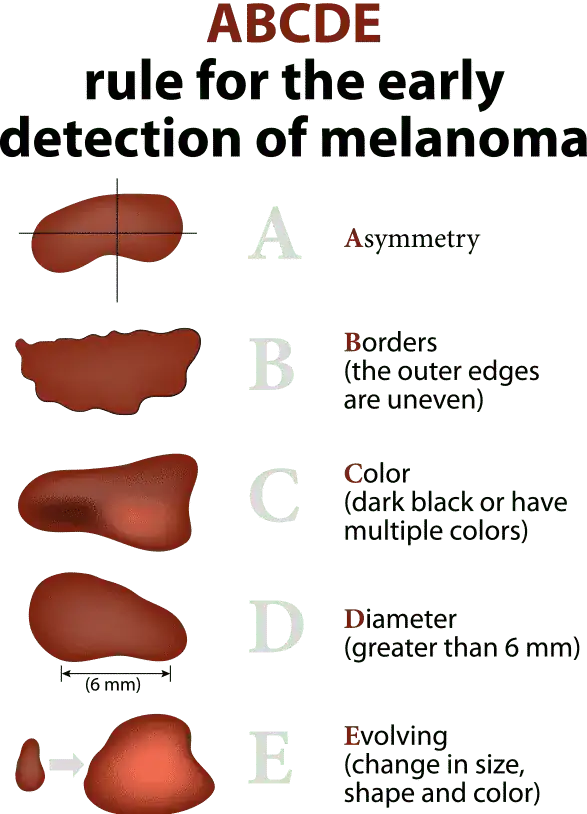
You can use the ABCD acronym to look for the following qualities:
- Asymmetry: An uneven shape can help the patient and physician identify an early problem. Not all asymmetric moles are cancer but it’s important to perform self-checks and report any concerns to the doctor.
- Borders: An uneven, feathered, notched, or wavy border around any mole should be checked.
- Color: The mole’s color can be an early warning symptom. Most moles are a single color. When a mole is partially two or more colors, it’s time to call the dermatologist. Some very unusual colors, including blue, white, or black, may be early warning symptoms of a serious skin cancer called melanoma.
- Diameter: The mole’s width can help to identify a problem. When an existing mole grows quickly or appears and grows quickly, contact Goodman Dermatology.
- Evolution: Pay special attention to any mole that changes over time.
¿Se puede prevenir el cáncer de piel?
Con el cuidado adecuado de la piel y hábitos de vida saludables, el cáncer de piel se puede prevenir y usted puede reducir significativamente su riesgo de desarrollar la afección. La mejor técnica es evitar los dañinos rayos UV, que provienen tanto del sol como de las camas de bronceado. Usar un protector solar de amplio espectro cuando está al aire libre puede proteger su piel de este tipo de daño y reducir su riesgo de cáncer de piel.
Los tipos de piel más claros también tendrán un mayor riesgo que aquellos con tipos de piel más oscuros. Si tiene la piel particularmente clara o sensible, es extremadamente importante que la proteja del daño con ropa o protector solar mientras está al aire libre.
If you need assistance diagnosing or treating skin cancer, contact us today to schedule your consultation at Goodman Dermatology. We serve the north metro Atlanta and North Georgia areas and many surrounding cities.