
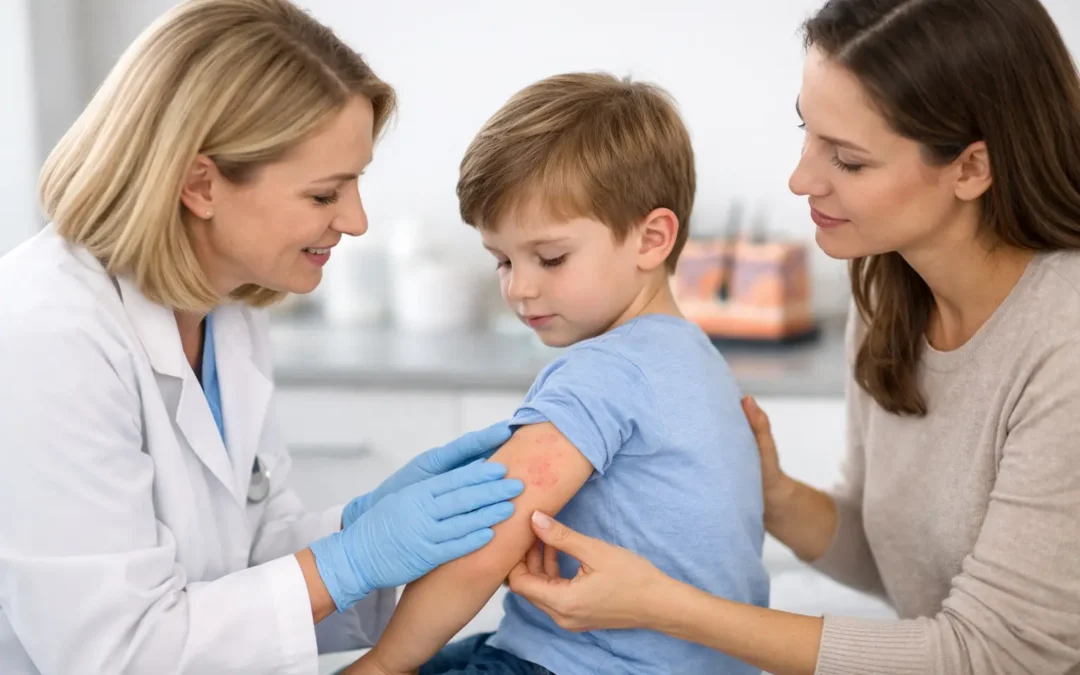
A child wakes up with red, itchy patches, and suddenly a simple morning gets complicated. Is it eczema, an allergic reaction, a viral rash, or something that needs prompt treatment? For parents, the hardest part is often not the rash itself. It is figuring out when home care is reasonable and when a specialist should step in.
A pediatric dermatologist for rash concerns can help sort through that uncertainty quickly. Children’s skin reacts differently than adult skin, and rashes that look similar at home can have very different causes, treatment plans, and timelines. When a rash is persistent, painful, spreading, or affecting sleep and daily comfort, specialized dermatology care can make a meaningful difference.
Why rash diagnosis in children can be tricky
Rash is a broad term, not a diagnosis. In pediatric dermatology, the same general appearance – redness, bumps, scaling, hives, or patches – can point to a wide range of conditions. Some are short-lived and mild. Others are chronic, contagious, allergy-related, inflammatory, or occasionally connected to a deeper medical issue.
Children are also more likely to scratch, rub, or irritate the area, which can change how a rash looks by the time they are seen. A diaper-area rash may not behave like a facial rash. A school-age child with eczema may also have infection layered on top of inflammation. A teen with a “rash” might actually have acne, folliculitis, contact dermatitis, or psoriasis beginning to show up.
That is why accurate diagnosis matters. The right treatment depends on the cause, the child’s age, the location of the rash, and whether the skin is inflamed, infected, or both.
When to see a pediatric dermatologist for rash
Not every rash requires a dermatology appointment, but some situations deserve expert evaluation sooner rather than later. If a child’s rash is not improving with basic care, keeps coming back, or is causing significant discomfort, it is reasonable to move beyond watchful waiting.
A pediatric dermatologist for rash evaluation is especially helpful when the rash is widespread, severe, or difficult to identify. The same is true if over-the-counter creams have not helped, if the rash is interfering with sleep, or if it is affecting sensitive areas like the face, scalp, hands, feet, or genitals.
Parents should also seek prompt care if the rash is blistering, crusting, oozing, painful, or accompanied by swelling. While dermatologists do not replace emergency care for severe allergic reactions, fever with a concerning rash, or trouble breathing, they do play an important role in diagnosing urgent skin conditions that need timely treatment.
Common childhood rashes a dermatologist evaluates
Some pediatric rashes are very common but still benefit from specialist care, especially if they are persistent or severe. Eczema is one of the most frequent examples. It can cause intense itching, dry patches, cracking, and recurring flares. For some children, it is mild. For others, it becomes a cycle of inflammation, scratching, poor sleep, and skin infection.
Contact dermatitis is another common issue. This happens when the skin reacts to something it touches, such as soaps, detergents, fragrances, metals, fabrics, or topical products. The challenge is that the trigger is not always obvious, especially when a child has repeated low-level exposure.
Hives can also be confusing. They may come from infection, allergies, heat, pressure, medications, or no clear trigger at all. If hives are recurrent or prolonged, a dermatologist can help determine whether the pattern fits urticaria, eczema, contact irritation, or another inflammatory skin process.
Fungal rashes, viral rashes, molluscum contagiosum, psoriasis, seborrheic dermatitis, heat rash, warts, and bacterial skin infections also show up regularly in pediatric dermatology. In many cases, what appears straightforward at first has overlap with another condition. That is where training and experience matter.
What happens at the appointment
Parents often expect rash care to be limited to a quick visual check and a prescription. In reality, a thorough pediatric dermatology visit usually starts with a careful history. The dermatologist will want to know when the rash started, whether it itches or hurts, what products have been used, whether the child has allergies or asthma, and if anyone else at home has similar symptoms.
The skin exam is equally important. Distribution, texture, borders, scale, color, and associated findings all help narrow the diagnosis. Sometimes the location tells the story. A rash in skin folds suggests one set of possibilities. A scalp rash with hair changes suggests another.
In some cases, testing may be appropriate. That can include evaluating for infection, scraping a lesion, or considering additional workup if the rash does not fit a common pattern. Most pediatric rash visits do not require extensive testing, but when a condition is persistent or unusual, a more detailed evaluation can prevent prolonged trial and error.
Treatment depends on the cause, not just the appearance
One of the most common frustrations for parents is trying multiple creams without clear results. That usually happens because treatment is being aimed at the look of the rash rather than its cause. A steroid cream may help eczema but worsen certain infections. An antifungal may do nothing for psoriasis. A heavy ointment may soothe dry skin but irritate heat rash in hot weather.
Effective treatment begins with the right diagnosis. Depending on the condition, care may include prescription topical medications, oral treatment, itch control, infection management, barrier repair, trigger avoidance, or a longer-term plan for chronic skin disease.
There is also a balance to strike. Not every rash needs aggressive treatment, particularly in very young children. On the other hand, delaying appropriate care can mean more inflammation, more scratching, and a higher risk of skin breakdown or infection. The best plan is usually the one that matches the diagnosis and the child’s age while keeping treatment practical for daily family life.
Why specialized pediatric skin care matters
Children are not just small adults when it comes to dermatology. Their skin barrier is different, their immune responses vary by age, and certain conditions present differently in infants, toddlers, school-age children, and teens. Medication selection also requires added care, especially for delicate areas and younger patients.
A pediatric-focused dermatology approach is helpful not only for diagnosis, but for making treatment realistic. Parents need clear instructions. They need to know how much medication to apply, how long to use it, when to expect improvement, and what signs suggest a follow-up is needed. They also need a plan that works for school schedules, sports, bathing routines, and the reality of getting a child to tolerate skin treatment more than once.
This is particularly important for chronic rashes like eczema or psoriasis, where long-term control matters more than a temporary fix. Good care is not just about calming a flare. It is about reducing recurrence, protecting the skin barrier, and helping families manage the condition with confidence.
How to know if a rash can wait
There are times when a rash can reasonably be monitored at home for a short period. Mild heat rash, temporary irritation from a new product, or a small patch of dry skin may improve with gentle skin care, fragrance-free products, and avoidance of obvious triggers.
Still, “wait and see” should have limits. If the rash is getting worse after several days, spreading quickly, becoming more uncomfortable, or returning again and again, it makes sense to schedule an evaluation. A rash that affects sleep, causes a child to miss school, or leads to repeated pediatric visits without a clear answer is no longer a minor issue.
For many families, convenience also matters. Access to experienced dermatology care close to home can make it easier to get answers before a temporary rash becomes an ongoing problem. Practices such as Goodman Dermatology support families with broad access to medical dermatology across North Georgia, which can be especially helpful when a child needs timely evaluation.
Choosing the right dermatologist for your child
When parents look for rash care, they are not just looking for an open appointment. They are looking for confidence in the diagnosis, a treatment plan that is safe and clear, and a team that understands how skin conditions affect children and families.
It helps to choose a practice with strong medical dermatology experience, access to board-certified specialists, and the ability to treat a wide range of pediatric skin conditions. Availability matters too. A convenient location, efficient scheduling, and a practice equipped to handle both common and more complex rashes can make follow-up care much easier if the condition needs ongoing management.
A rash may be temporary, or it may be the first sign of a skin condition that needs structured care. Either way, when the skin is not improving or the diagnosis is unclear, expert evaluation can replace guesswork with a plan parents can trust. If your child’s rash has gone beyond simple home care, getting the right answer is often the fastest path to relief.