
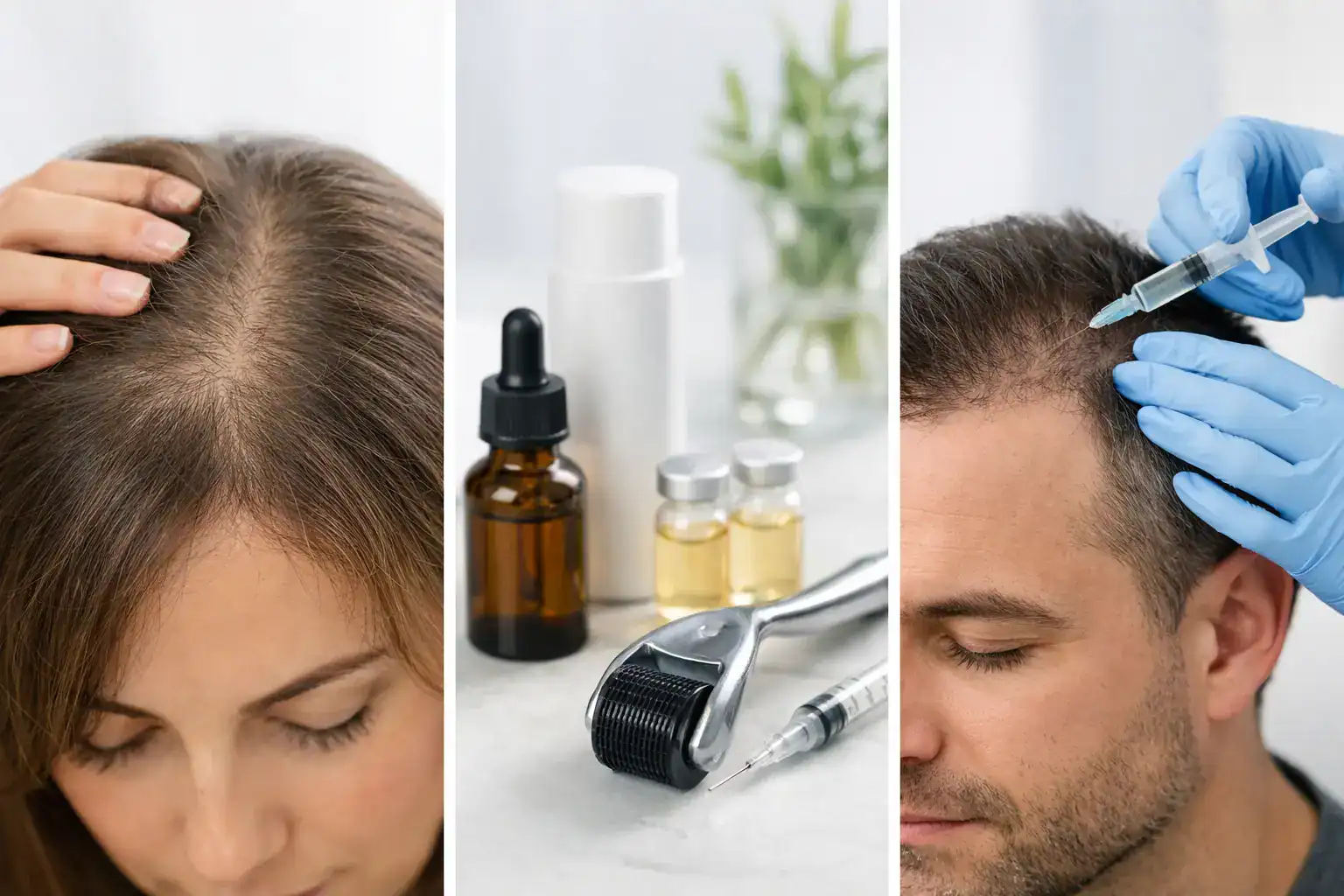
Hair in the shower drain gets your attention fast. So does a widening part, more scalp showing in bright light, or a ponytail that feels thinner than it used to. If you are searching for the best treatments for thinning hair, the most useful first step is not buying another shampoo. It is finding out why your hair is thinning, because the right treatment depends on the cause.
Thinning hair is common in men and women, and it can start gradually or seem to happen all at once. Sometimes it is inherited. Sometimes it follows stress, illness, childbirth, weight loss, medication changes, or a scalp condition that is quietly driving inflammation. Many patients try several products before they get a real diagnosis. That delay matters, especially when hair loss is progressive.
What causes thinning hair?
Hair thinning is a symptom, not a single diagnosis. One of the most common causes is androgenetic alopecia, also called male or female pattern hair loss. This type usually develops over time and is influenced by genetics and hormones. Men often notice recession at the temples or thinning at the crown, while women more often see diffuse thinning through the top of the scalp and a broader part line.
Another common cause is telogen effluvium. This happens when more hairs than usual shift into the shedding phase after a trigger such as a major illness, surgery, high fever, childbirth, nutritional deficiency, emotional stress, or rapid weight change. The shedding can be dramatic, but in many cases it improves once the trigger is addressed.
Scalp disorders also matter. Seborrheic dermatitis, psoriasis, fungal infections, and inflammatory scarring conditions can interfere with healthy growth. In those cases, treating the scalp itself is just as important as treating the hair loss. Thyroid disease, iron deficiency, low vitamin D, and some medications can also contribute.
That is why one person may do well with a medication, while another needs lab work, scalp treatment, or a more targeted plan.
The best treatments for thinning hair start with diagnosis
The best treatments for thinning hair are the ones matched to your pattern of loss, medical history, and goals. A dermatology evaluation typically includes a close scalp exam, review of timing and triggers, and sometimes blood work or a scalp biopsy when the diagnosis is unclear.
This step helps answer practical questions. Is the hair loss likely reversible? Is inflammation present? Are the follicles miniaturizing, or are they being damaged? Is the goal to stop further loss, stimulate regrowth, or both? Those details shape treatment and set realistic expectations.
Topical minoxidil
Minoxidil is one of the most established treatments for thinning hair. It is available over the counter in liquid and foam forms and is used for both men and women. It works by prolonging the growth phase of hair and can help increase hair density over time.
The trade-off is patience and consistency. Most patients need several months before they can judge whether it is helping, and stopping treatment usually means losing the benefit. Some people notice scalp irritation, and a temporary increase in shedding can happen early on as older hairs cycle out. That can be unsettling, but it does not always mean the treatment is failing.
Oral medications
Prescription oral treatment can be appropriate for some patients, especially when pattern hair loss is the main issue. Finasteride is commonly used for men with androgenetic alopecia and can help slow progression and support regrowth. Because it affects hormone pathways, it is not right for everyone, and counseling about possible side effects is important.
For women, treatment options may include oral minoxidil in select cases or hormone-related medications such as spironolactone when the clinical picture fits. These are not casual one-size-fits-all solutions. They require review of medical history, other medications, pregnancy considerations, blood pressure, and individual risk factors.
Platelet-rich plasma for thinning hair
Platelet-rich plasma, or PRP, is an in-office treatment that uses a concentration of your own platelets to support the scalp environment and encourage hair growth. It is often considered for early to moderate thinning, especially when patients want a non-surgical option that can be combined with medication.
PRP can be helpful, but results vary. It is usually done as a series rather than a single session, and maintenance may be needed. Patients who respond often see improved thickness and reduced shedding rather than a dramatic restoration of a long-bare area. It tends to work best when follicles are still active.
Treating underlying scalp disease
If the scalp is inflamed, itchy, flaky, tender, or showing signs of scarring, managing that inflammation becomes a priority. Medicated shampoos, topical steroids, steroid injections, antifungal treatment, or other prescription therapies may be part of the plan. When inflammation is driving loss, cosmetic products alone will not solve the problem.
This is especially important in forms of scarring alopecia. In these conditions, early treatment can help preserve follicles before loss becomes permanent. Waiting too long can limit what any therapy can recover.
Hair supplements and vitamins: useful or overused?
Patients often ask whether biotin, collagen powders, or hair vitamins are among the best treatments for thinning hair. The honest answer is that supplements only help when a deficiency or nutritional issue is part of the problem. If your iron stores are low or your diet has been significantly restricted, correcting that can make a real difference. If your levels are normal, adding more is not always useful.
Biotin is a good example. True biotin deficiency is uncommon. Taking extra biotin is not a proven fix for most cases of hair thinning, and it can interfere with certain lab tests. That does not mean nutrition is irrelevant. It means targeted treatment is better than guesswork.
A balanced diet with enough protein, iron, zinc, and key vitamins supports normal growth. If shedding began after illness, stress, or rapid weight loss, nutrition and recovery may be an important part of the plan.
Shampoos, serums, and low-level light therapy
Many nonprescription products promise fuller hair. Some can improve the appearance of hair by reducing breakage, adding volume, or improving scalp comfort. That can be worthwhile, especially when styling has become frustrating. But appearance and regrowth are not the same thing.
Certain shampoos may support scalp health or complement a broader regimen. Ketoconazole shampoo, for example, may be recommended in some cases because it can help with scalp inflammation and dandruff. Cosmetic thickening products can also make hair look denser while medical treatment has time to work.
Low-level light therapy devices are another option. Some patients like them because they are noninvasive and can be used at home. Evidence is promising for select cases of pattern hair loss, but devices vary, and results are generally modest. They work best as part of a treatment plan, not as a substitute for diagnosis.
When hair transplant may make sense
Hair transplant surgery can be an excellent option for some patients with stable pattern hair loss and enough donor hair. It is not typically the first treatment for someone with sudden shedding, uncontrolled scalp inflammation, or an unclear diagnosis.
The timing matters. If active thinning is still progressing quickly, medical treatment is often used first to stabilize loss and protect existing hair. A transplant can improve density in the right candidate, but it does not stop future hair loss in untreated areas.
What to expect from treatment
One of the hardest parts of treating thinning hair is the timeline. Hair grows slowly, and meaningful improvement usually takes months, not weeks. Most effective plans aim to reduce shedding first, then improve thickness over time. Some patients regain significant density. Others mainly preserve what they have and slow further thinning. That still counts as success when the condition is progressive.
Photos are often more useful than memory. Because changes happen gradually, patients may not notice improvement until they compare images taken several months apart. Consistency also matters. Even strong treatments can underperform if they are started and stopped repeatedly.
When to see a dermatologist
If your thinning hair has lasted more than a few months, is getting worse, comes with itching or scalp discomfort, or is causing visible widening of the part or patchy loss, it is time to be evaluated. Sudden shedding after illness may improve on its own, but it can overlap with other causes. Children and teens with hair loss should also be assessed promptly.
For patients across North Georgia, access to timely dermatology care can make a difference. Earlier evaluation can identify reversible causes, protect follicles at risk, and help you avoid spending money on products that do not match the problem.
The best next step is usually simpler than it seems: get a clear diagnosis, start the right treatment early, and give it enough time to work.