
A widening part, more scalp showing in photos, hair collecting in the shower drain – for many women, hair loss starts subtly and then becomes hard to ignore. It can affect confidence, daily routines, and even how you wear your hair. Just as important, it can also signal an underlying medical issue that deserves attention.
If you are searching for a dermatologist for hair loss women can rely on, the right next step is a medical evaluation, not guesswork. Hair loss in women is common, but it is not all the same. Different causes require different treatments, and timing matters. The earlier the cause is identified, the better the chance of slowing shedding, preserving density, and supporting regrowth where possible.
Why a dermatologist for hair loss in women is the right specialist
Dermatologists diagnose and treat conditions involving the skin, hair, and nails, which makes them the most appropriate specialist for most forms of female hair loss. A thorough visit looks beyond the hair itself. Your dermatologist evaluates the scalp, the pattern of shedding, your medical history, medications, recent stressors, hormonal changes, and any signs of inflammation or scarring.
That distinction matters. Some women have a common hereditary pattern of thinning. Others have shedding related to illness, childbirth, weight loss, thyroid disease, iron deficiency, autoimmune conditions, or traction from styling habits. Some forms of hair loss are temporary. Others can become permanent if treatment is delayed.
A good evaluation is efficient but detailed. In many cases, the diagnosis can be made through a history, scalp exam, and focused testing. When needed, a dermatologist may recommend bloodwork or a scalp biopsy to clarify what is happening at the follicle level.
Common reasons women lose hair
Female hair loss is not one condition. It is a symptom with several possible causes, and the treatment plan depends on the type.
Female pattern hair loss
This is one of the most common diagnoses. It usually shows up as gradual thinning at the crown, a broader part line, or reduced overall density rather than a receding hairline. Genetics often play a major role, and hormonal shifts can make it more noticeable over time.
Female pattern hair loss tends to progress slowly. That can make it easier to postpone care, but earlier treatment often leads to better long-term control.
Telogen effluvium
This type of shedding often begins a few months after a trigger such as illness, surgery, major stress, childbirth, rapid weight loss, or a medication change. Women may notice handfuls of hair coming out during washing or brushing, even if the scalp looks normal.
Telogen effluvium can improve once the trigger is addressed, but not always on the timeline patients expect. A dermatologist can help confirm the diagnosis and rule out overlapping causes.
Alopecia areata
Alopecia areata is an autoimmune condition that often causes sudden round or oval patches of hair loss. In some cases, it can affect the eyebrows, eyelashes, or larger areas of the scalp. Because it can progress unpredictably, prompt evaluation is especially important.
Scarring alopecia
This group of disorders causes inflammation that damages hair follicles permanently. Symptoms may include burning, itching, tenderness, scale, or visible redness around follicles. Women with scarring hair loss need early diagnosis and treatment to help prevent additional loss.
Traction and hair care-related loss
Tight braids, weaves, ponytails, extensions, chemical processing, and heat styling can all contribute to hair breakage or traction alopecia. This is one area where a dermatologist can guide both treatment and prevention, especially when styling practices are part of the problem.
Signs it is time to schedule an appointment
Some shedding is normal, but persistent or noticeable changes deserve medical attention. If your part is widening, your ponytail feels thinner, you are seeing more scalp, or you have sudden patchy loss, it is reasonable to be evaluated.
Scalp symptoms also matter. Itching, tenderness, flaking, redness, or bumps may point to inflammation or another scalp condition that is affecting hair growth. Hair loss after a major stressor can be temporary, but if shedding continues for more than a few months or seems severe, professional assessment is worthwhile.
For women after menopause, during the postpartum period, or with a history of thyroid disease, anemia, PCOS, or autoimmune conditions, new thinning should not be brushed off as cosmetic alone. Hair changes can reflect a broader health issue.
What to expect from a dermatologist for hair loss women can trust
The best hair loss care is personalized. At your visit, your dermatologist will usually ask when the shedding started, whether it is gradual or sudden, which areas are affected, and whether there have been recent illnesses, pregnancies, medication changes, or nutritional shifts. Family history can also be relevant.
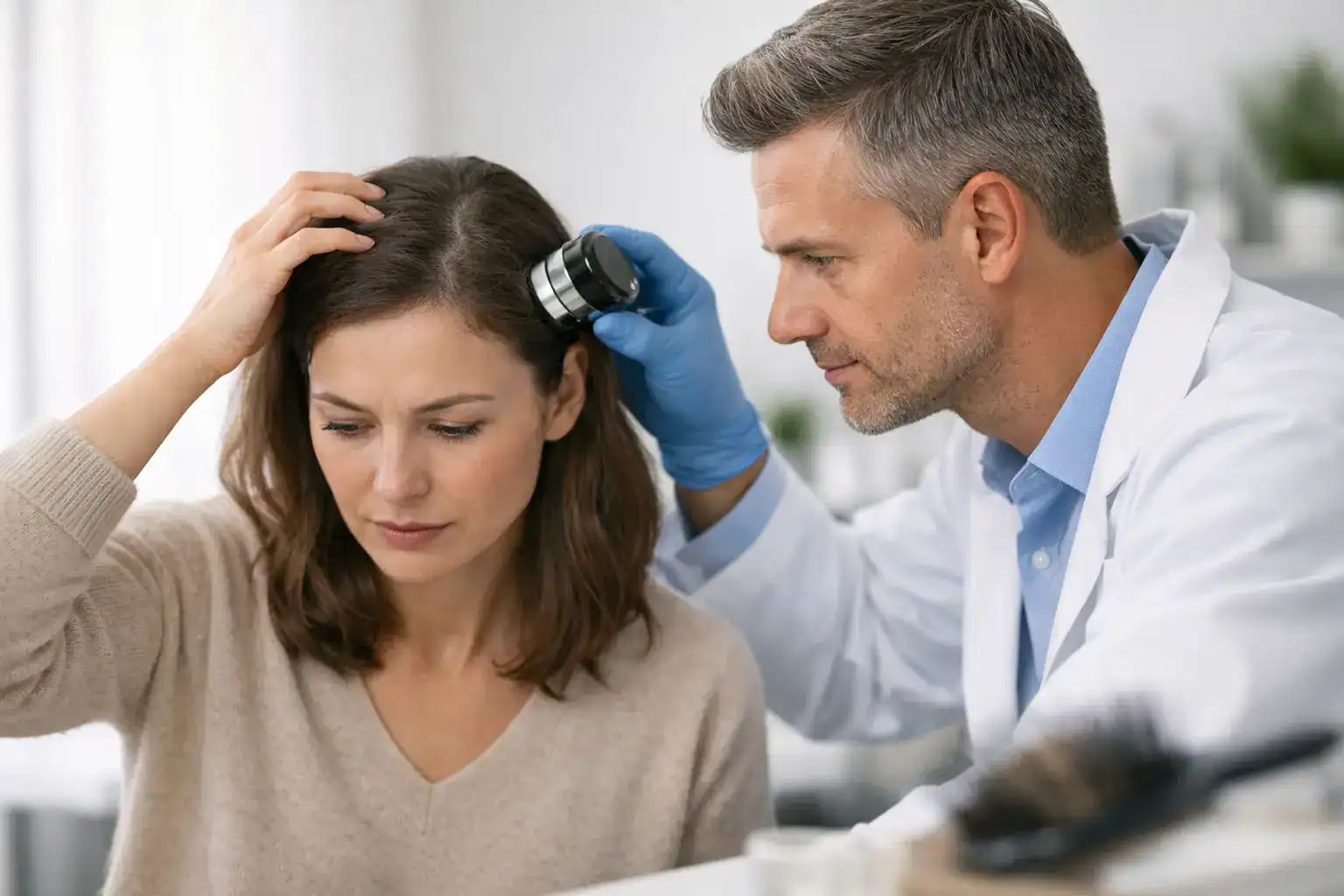
The scalp exam helps narrow the cause. Your dermatologist may look for miniaturized hairs, broken hairs, inflammation, scale, scarring, or changes in follicle density. In some cases, a hair pull test or dermoscopic exam provides more detail.
Testing is not needed for every patient, but sometimes it is the difference between treating the symptom and identifying the cause. Iron status, thyroid function, vitamin deficiencies, and hormone-related factors may all be considered depending on the pattern and history.
Treatment options depend on the diagnosis
There is no one-size-fits-all solution for women with hair loss. Effective treatment starts with an accurate diagnosis and realistic expectations.
For female pattern hair loss, topical or oral medications may help slow thinning and improve density. Some patients also benefit from adjunctive procedures or scalp-focused therapies, depending on candidacy and severity. Improvement usually takes time. Hair grows slowly, so meaningful change often takes several months rather than several weeks.
For telogen effluvium, treatment may center on correcting the underlying trigger, supporting scalp health, and allowing the hair cycle to normalize. This can be frustrating because recovery is often gradual, even after the cause has resolved.
For alopecia areata, treatment may involve anti-inflammatory approaches designed to interrupt the immune attack on the follicles. Response varies. Some cases regrow well, while others need ongoing management.
For scarring alopecia, the goal is often to stop or reduce inflammatory damage as quickly as possible. Regrowth may be limited once follicles are scarred, which is why early intervention matters so much.
When traction or breakage contributes to thinning, treatment also includes changes in styling practices. Medical therapy can support recovery, but continued tension or chemical damage may work against progress.
Why self-diagnosis often delays results
Many women try shampoos, supplements, oils, or social media recommendations before getting evaluated. That is understandable, but it can waste time if the underlying cause is medical. A product marketed for hair growth will not treat autoimmune hair loss, reverse scarring alopecia, or correct iron deficiency.
Even treatments that can help are not right for everyone. Some options are better for diffuse thinning, some for inflammatory scalp disease, and some require consideration of age, medical history, pregnancy plans, or other medications. What works for one patient may be ineffective or inappropriate for another.
Hair loss care should also be convenient
Women often put off appointments because life is busy. Between work, family schedules, and long travel times, non-urgent concerns get pushed down the list. That is one reason access matters. When specialist care is easier to schedule and closer to home, patients are more likely to seek help before thinning becomes more advanced.
For patients in North Georgia, practices such as Goodman Dermatology make it easier to get evaluated with multiple office locations, broad dermatology services, and care built around efficient access. That matters for hair loss, where follow-up and treatment adjustments are often part of the process.
A realistic mindset helps
Hair loss treatment can be very effective, but it is not instant. In some cases, the goal is regrowth. In others, it is stopping progression, reducing shedding, or preserving the hair you still have. Success depends on the diagnosis, how long the condition has been active, and how the follicles respond.
That is why clear communication is so important. A qualified dermatologist will explain what is likely, what may take time, and where the trade-offs are. Some therapies require long-term use to maintain benefit. Some are not appropriate during pregnancy. Some work best in combination rather than alone.
If you have been watching your hair thin and hoping it will sort itself out, a professional evaluation is a practical next step. Hair loss in women is common, but it is still medical, personal, and worth taking seriously. The right diagnosis can replace uncertainty with a treatment plan that fits your needs, your health, and your life.