
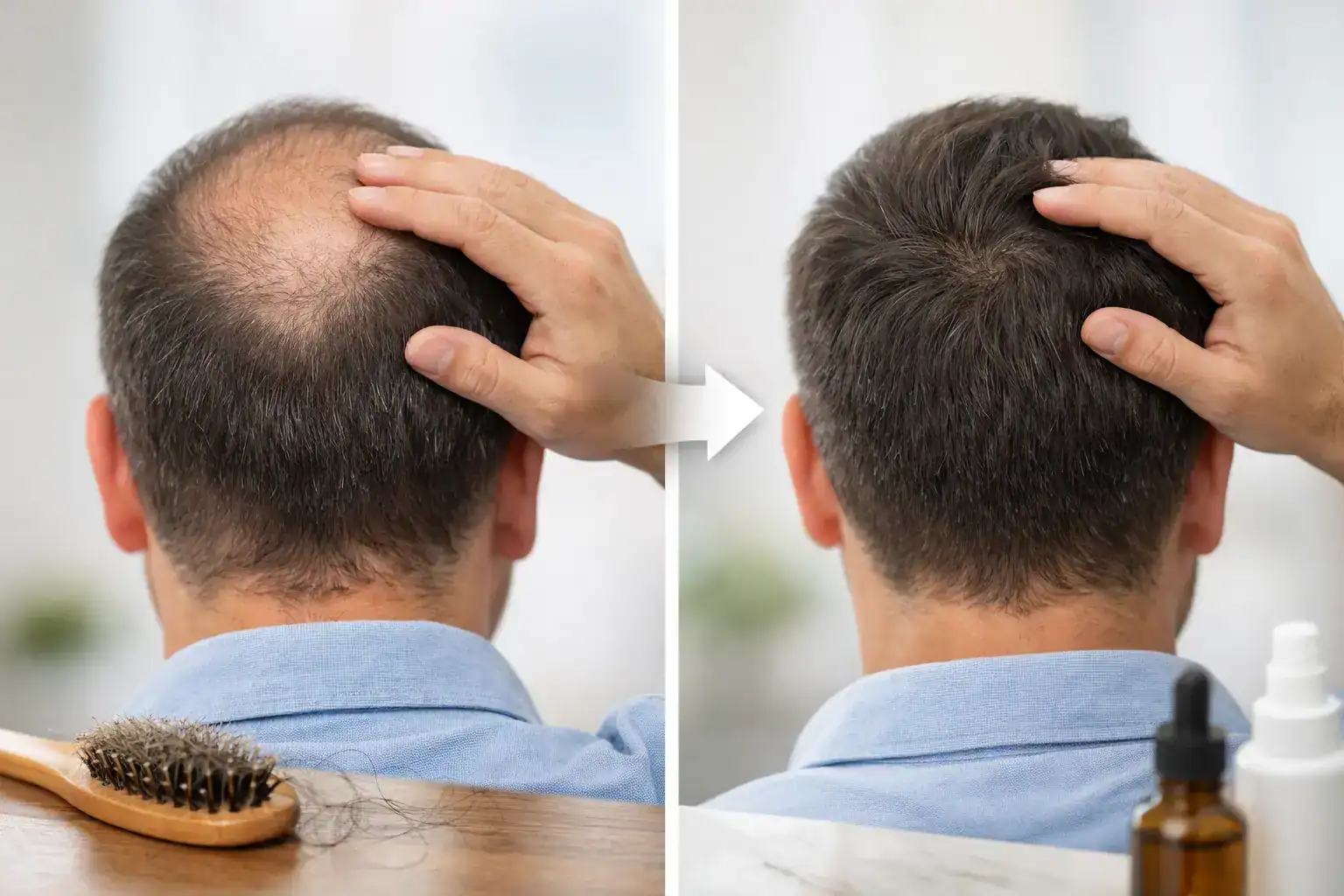
Hair in the shower drain can feel alarming, especially when it starts happening more often or your part looks wider than it used to. A common question in dermatology is simple but loaded with anxiety: is hair loss reversible? The honest answer is that sometimes it is, and sometimes it is not. The key is identifying the cause early, because the right treatment depends on what is driving the shedding or thinning in the first place.
Some forms of hair loss improve once the trigger is treated or removed. Others can be slowed significantly, and in many cases partially reversed, with medical treatment. A few types cause permanent damage to the hair follicle, which means regrowth is much harder once scarring has occurred. That is why timing matters. Hair loss is not one condition – it is a symptom with several possible causes.
Is hair loss reversible for everyone?
Not every patient will have the same outcome, even with prompt care. Age, genetics, medical history, hormone shifts, recent illness, medications, stress levels, and how long the hair loss has been happening all affect the answer.
In general, hair loss is more likely to be reversible when the follicle is still active and has not been permanently damaged. If the hair follicle is dormant but alive, regrowth may be possible. If inflammation or scarring has destroyed the follicle, treatment may focus more on preventing further loss than restoring what is already gone.
This is why an accurate diagnosis matters more than guessing based on internet photos or trying one product after another. Two people can have thinning in similar areas for completely different reasons.
Types of hair loss that may be reversible
Telogen effluvium
Telogen effluvium is one of the most common causes of sudden shedding. It often happens after a physical or emotional stressor such as illness, surgery, childbirth, major weight loss, nutritional deficiency, or a high fever. Hair may come out in larger amounts when washing or brushing, but the scalp usually does not show obvious bald patches.
This type of hair loss is often reversible. Once the trigger is corrected, many patients gradually see improvement over several months. The challenge is that shedding often starts six to twelve weeks after the trigger, so the connection is not always obvious.
Nutritional or medical causes
Iron deficiency, thyroid disease, vitamin deficiencies, and certain hormonal changes can contribute to hair thinning or shedding. In these cases, treating the underlying issue may allow hair growth to recover.
The timeline varies. Hair grows slowly, so even after the root cause is addressed, it may take several months before visible improvement appears. Patients sometimes stop treatment too early because they expect immediate regrowth.
Alopecia areata
Alopecia areata is an autoimmune condition that can cause round patches of hair loss and, in some cases, more extensive thinning. Because the immune system targets the hair follicle, treatment often focuses on calming that inflammation.
This condition can be reversible, but it is unpredictable. Some patients regrow hair spontaneously. Others need prescription treatment, and some experience recurrence over time. Even when hair returns, follow-up care may still be important.
Traction-related hair loss
Hairstyles that pull tightly on the scalp can damage hair over time, especially around the hairline and temples. If caught early, this can improve by changing styling habits and reducing chronic tension on the follicles.
If traction continues for too long, however, the loss may become permanent. That is one reason early evaluation is especially important for patients noticing thinning edges or a receding hairline associated with braids, extensions, tight ponytails, or similar styles.
When hair loss may not be fully reversible
Androgenetic alopecia
Androgenetic alopecia, often called male pattern or female pattern hair loss, is the most common long-term cause of thinning. It is driven largely by genetics and hormones. Men often notice recession at the temples or thinning at the crown. Women more often see widening of the part or diffuse thinning over the top of the scalp.
Is hair loss reversible in this situation? Partially, in many cases. Completely reversing advanced pattern hair loss is less common, but treatment can often slow progression and help some hair regrow or appear fuller. Results are usually better when treatment starts early, before miniaturized follicles become less responsive.
Scarring alopecia
Scarring forms of alopecia are less common but more urgent. These conditions involve inflammation that destroys hair follicles and replaces them with scar tissue. Patients may notice burning, itching, tenderness, scaling, or shiny areas where hair no longer grows.
This type of hair loss is generally not reversible once the follicle is destroyed. The goal of treatment is to stop the process before more permanent loss occurs. Delaying care can make a meaningful difference in long-term outcome.
What treatments can help reverse hair loss?
Treatment depends on the diagnosis, not just the symptom. A board-certified dermatologist may evaluate the scalp, review your health history, examine the pattern of loss, and sometimes recommend lab work or a scalp biopsy.
For pattern hair loss, topical or oral medications may help slow thinning and support regrowth. For inflammatory causes, prescription anti-inflammatory treatments may be needed. If a nutritional issue or thyroid disorder is contributing, correcting that underlying problem is part of the plan. If styling practices are causing traction, behavioral changes matter just as much as any medication.
Patients often ask about over-the-counter shampoos, supplements, and social media trends. Some may support scalp health, but they are not all equally effective, and some have little evidence behind them. Hair loss treatment works best when it is tailored to the actual cause rather than chosen by marketing claims.
Why early diagnosis matters
Hair loss can feel cosmetic, but medically it deserves attention. The earlier the diagnosis, the more treatment options are usually available. This is especially true for scarring alopecias and progressive pattern hair loss, where waiting may reduce the amount of recoverable hair.
Early evaluation also helps patients avoid spending months on products that do not match the problem. Shedding from stress, patchy loss from autoimmunity, and thinning from hereditary causes are managed differently. When patients have a clear diagnosis, they can make decisions with more confidence and more realistic expectations.
What to expect from treatment
One of the hardest parts of hair loss treatment is patience. Hair growth happens in cycles, and meaningful improvement usually takes time. Many effective treatments need at least three to six months before early changes are visible, and a year is not unusual for fuller results.
Progress is also not always dramatic. Sometimes success means less shedding, slower progression, better density, or healthier regrowth rather than complete restoration to a prior baseline. That does not mean treatment failed. It means the goal is preserving and improving what the follicles can still produce.
A realistic treatment plan should balance cause, severity, timeline, and maintenance. Some conditions improve and resolve. Others need long-term management to keep gains from fading.
Signs it is time to see a dermatologist
If hair loss has lasted more than a few weeks, is getting worse, or comes with itching, pain, redness, scale, or distinct bald spots, it is worth scheduling an evaluation. Rapid shedding after illness or stress can also benefit from medical assessment, especially if it is severe or prolonged.
Children, teens, and adults can all experience meaningful hair loss, and the causes are not always obvious without an exam. For busy families and professionals, getting answers early can prevent months of uncertainty and help protect future growth.
At Goodman Dermatology, patients across North Georgia can be evaluated for common and complex causes of hair loss with a treatment plan built around the diagnosis, age, goals, and scalp health of the individual patient.
The most helpful way to think about hair loss is this: reversible is not a yes-or-no label. It is a medical question with a timeline. The sooner you understand what type of hair loss you have, the better your chance of improving it and protecting the hair you still have.