
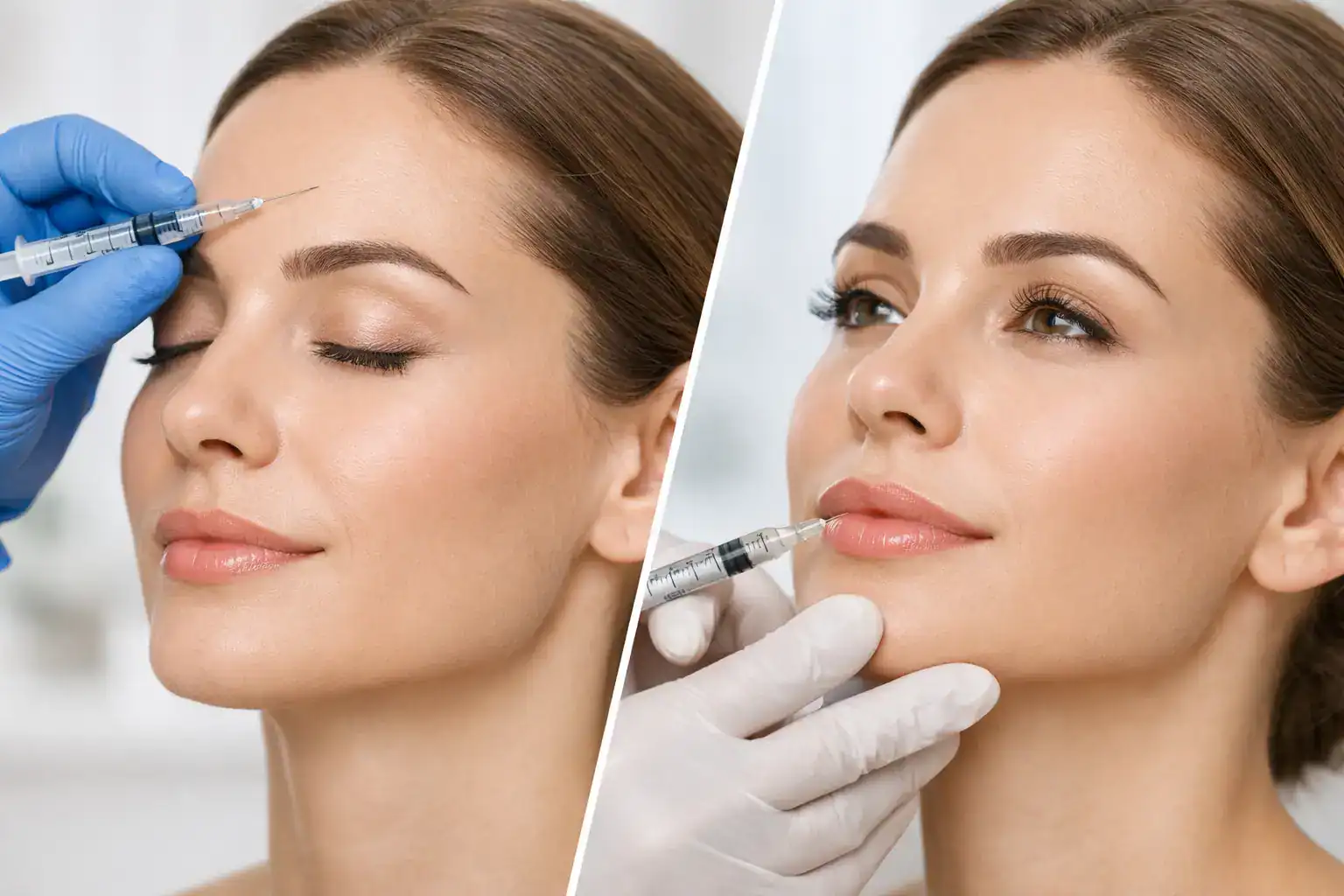
A smoother forehead and fuller cheeks can both make you look more refreshed, but they are not treated the same way. When patients ask about botox vs dermal fillers, the real question is usually simpler: what is causing the change you see in the mirror – muscle movement, volume loss, or both?
That distinction matters. Botox and fillers are both injectables, but they work in very different ways. Choosing the right one starts with an accurate diagnosis of the concern, not just picking the treatment you have heard about most often.
Botox vs dermal fillers: the basic difference
Botox is a neuromodulator. It relaxes targeted facial muscles that create expression lines from repeated movement. Think forehead lines, frown lines between the brows, and crow’s feet. When those muscles contract less strongly, the skin above them looks smoother.
Dermal fillers do not relax muscles. They restore or add volume beneath the skin. That makes them useful for concerns like thinning lips, hollow cheeks, under-eye volume loss, deeper smile lines, and age-related loss of facial structure. Many fillers are made with hyaluronic acid, a substance that naturally occurs in the body and helps attract moisture.
In practical terms, Botox treats dynamic wrinkles – the ones caused by motion. Fillers treat static volume loss and contour changes – the ones that come from aging, genetics, or tissue descent. Some patients clearly need one or the other. Many benefit from a combination approach.
What Botox is best for
Botox works best in areas where muscle movement is the main problem. The most common treatment areas are the horizontal forehead lines, the vertical lines between the eyebrows, and crow’s feet at the outer corners of the eyes.
It can also be helpful for chin dimpling, a downturned mouth, neck banding, and in some cases jawline slimming from overactive masseter muscles. In dermatology and aesthetic practice, it may also be used for excessive sweating.
The benefit of Botox is precision. A skilled injector can soften lines while preserving natural expression. The goal is not a frozen face. It is a more rested appearance that still looks like you.
Results are not immediate. Most patients start to notice improvement within a few days, with fuller results appearing around one to two weeks after treatment. The effect is temporary and typically lasts three to four months, though that can vary by treatment area, dose, and individual muscle strength.
What dermal fillers are best for
Dermal fillers are chosen when the face needs support, shape, or softness rather than muscle relaxation. Common uses include adding volume to the cheeks, defining the jawline, restoring fullness in the temples, softening nasolabial folds, improving marionette lines, and enhancing the lips.
Fillers can also be used more strategically to create balance. A chin that appears recessed, for example, may benefit from filler to improve profile harmony. In the midface, restoring cheek support can subtly improve lower-face heaviness without surgery.
This is where experience matters. Filling a line directly is not always the best plan. Sometimes the better result comes from treating the area above it and restoring structural support. Done well, filler should look refined, not obvious.
Many hyaluronic acid fillers last anywhere from six months to 18 months depending on the product used, the area treated, and how quickly your body metabolizes it. Some areas, like the lips, tend to break down filler faster. Others, like the cheeks, may hold results longer.
How to decide between Botox and fillers
The easiest way to think about botox vs dermal fillers is this: if the issue appears when you make an expression, Botox may be the better fit. If the issue is visible even when your face is fully at rest, volume loss may be contributing, and filler may be more appropriate.
A few examples make this clearer. If you notice lines across your forehead mainly when you raise your brows, Botox is often the first treatment considered. If your cheeks look flatter than they used to and your lower face seems heavier, filler may help restore support. If you have deep lines around the mouth that remain even when you are not smiling, the answer may be filler, skin resurfacing, or a combined approach rather than Botox alone.
Age can play a role, but it is not the deciding factor. Some younger patients choose Botox early to soften expression lines before they become more etched into the skin. Others in their 40s, 50s, or beyond may need filler because facial volume loss has become more noticeable. Your anatomy, skin quality, movement patterns, and goals matter more than your age alone.
Can you get Botox and dermal fillers together?
Yes, and many patients do. Botox and filler are often complementary because facial aging rarely comes from one cause alone. Movement, collagen loss, fat pad changes, bone resorption, and skin texture all contribute over time.
A patient may use Botox to relax the muscles causing frown lines while also using filler to restore cheek volume or soften the folds around the mouth. When treatments are combined thoughtfully, the result can look more balanced than relying on one product to do a job it was never meant to do.
The key is restraint and planning. More product does not automatically mean a better result. Natural-looking outcomes usually come from careful dosing, appropriate product selection, and a treatment plan built around facial proportions rather than trends.
Botox vs dermal fillers: what to expect at your appointment
A consultation should come before any injection. Your provider should examine facial movement at rest and in motion, review your medical history, discuss prior treatments, and ask what bothers you most. This is also the time to talk about timeline, budget, and how subtle or noticeable you want the result to be.
Botox appointments are generally quick. Small amounts are injected into specific muscles using a very fine needle. Filler appointments may take a bit longer because product choice, placement depth, and facial mapping are more nuanced. Some fillers contain lidocaine, which can make treatment more comfortable.
Mild redness, swelling, or bruising can happen with either treatment. Botox has little downtime for most patients, though you will be given simple aftercare instructions. Filler may cause more swelling depending on the area treated, especially in the lips.
A qualified dermatology injector will also discuss safety. That matters because filler treatment, while common and effective, requires a detailed understanding of facial anatomy and blood vessel patterns. Expertise is not a luxury here. It is part of good care.
Cost, longevity, and maintenance
Patients often ask which option is more affordable, but that depends on the area treated and how much product is needed. Botox is usually priced by unit. Fillers are commonly priced by syringe. One treatment may cost less upfront but require more frequent maintenance.
Botox typically needs repeat treatment every three to four months to maintain the effect. Filler usually lasts longer, but it may involve a higher initial investment. The better question is not which is cheaper. It is which treatment is most likely to address the concern correctly.
Choosing the wrong injectable can be frustrating and expensive. Botox will not restore cheek volume. Filler will not reliably relax forehead muscles. Starting with the right plan is what protects both your result and your budget.
Why injector training matters
Injectables are technique-driven treatments. Product quality matters, but the person evaluating your face and performing the injections matters just as much. Board-certified dermatology care offers an added layer of confidence because the treatment is grounded in skin and facial anatomy, aesthetic judgment, and medical safety.
That is especially relevant for patients who want conservative, polished results. Most people are not asking to look dramatically different. They want to look less tired, less tense, or more like themselves a few years ago. That takes clinical judgment, not just product placement.
For patients in North Georgia who want both convenience and specialist-level care, seeing an experienced dermatology team can also make long-term planning easier. If your goals shift over time from injectables to laser treatments, skin tightening, scar revision, or medical skin care, your care can stay coordinated.
The best injectable treatment is the one that matches the cause of the concern. If lines come from repeated muscle movement, Botox may be the answer. If the issue is volume loss or contour change, filler may be the better fit. And if both are present, a personalized plan often delivers the most natural, refined result. A thoughtful consultation can tell you more than a mirror ever will.