
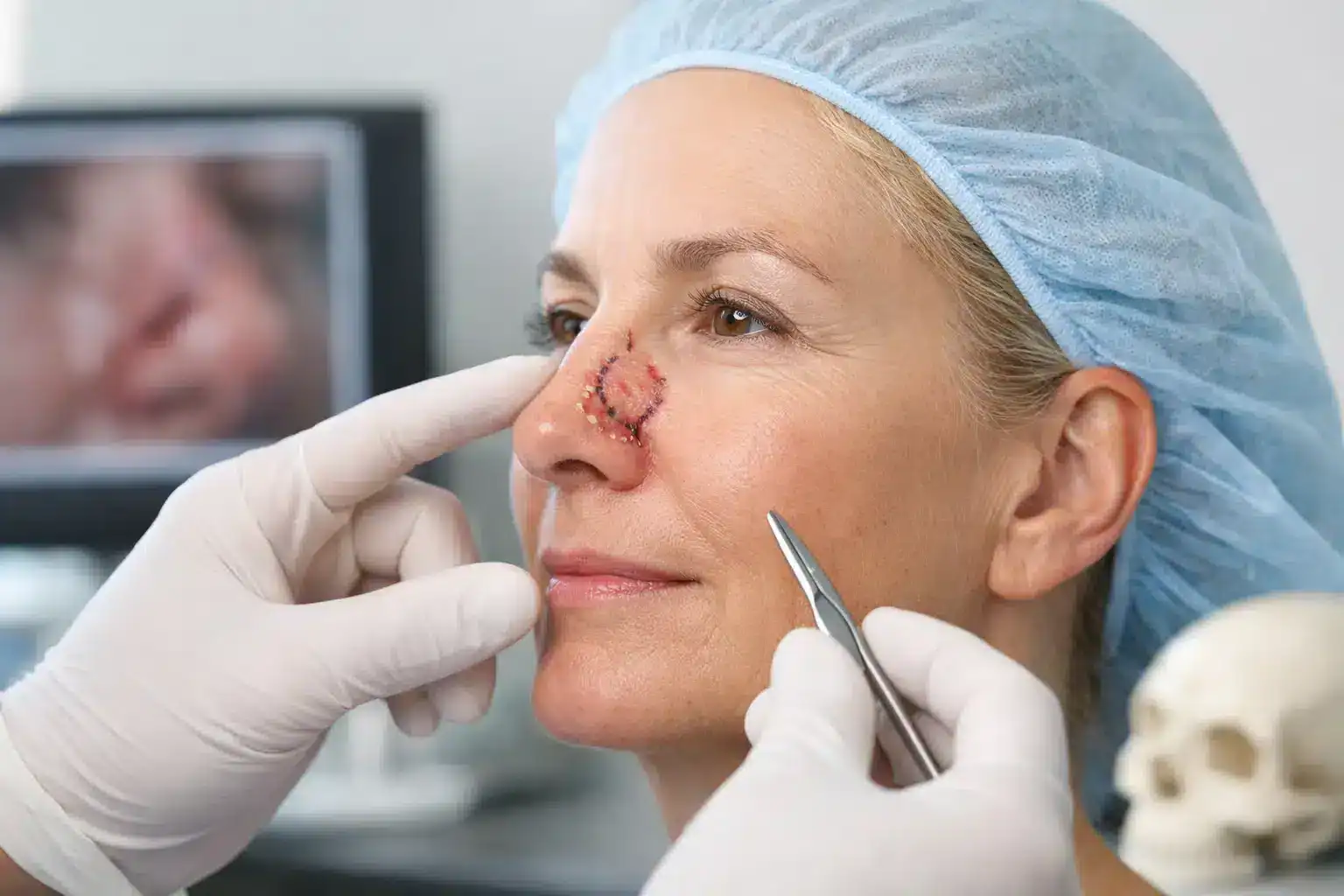
A skin cancer removed from the nose creates two concerns at once: getting clear margins and preserving one of the most visible, structurally complex areas of the face. That is why Mohs surgery nose reconstruction is not treated as an afterthought. The reconstruction plan matters because the nose has limited extra skin, distinct cosmetic subunits, and an important role in breathing.
For many patients, the first question is simple: Will my nose look normal again? The honest answer is that results depend on the size, depth, and location of the surgical defect, but carefully planned reconstruction can often restore both appearance and function very well. The key is matching the repair to the defect rather than forcing every wound into the same solution.
Why the nose is different after Mohs surgery
The nose is made up of several regions – the tip, bridge, sidewall, dorsum, alae, and soft triangle – and each behaves differently after surgery. Skin thickness changes from one area to another. The contour is curved, the support underneath varies, and even a small scar can be more noticeable here than on flatter areas of the body.
That is why nasal reconstruction is about more than closing an opening in the skin. A good repair aims to protect the airway, maintain symmetry, and place scars where they are least distracting. In some cases, the surgeon can close the wound directly. In others, a skin flap or graft produces a better result. Sometimes the best choice is letting part of the area heal naturally under close guidance, especially for small superficial wounds in selected locations.
Mohs surgery nose reconstruction options
The right approach depends on the defect left after the cancer is fully removed. Mohs surgery is performed first so that reconstruction is based on the final, confirmed size of the wound. That sequence is one reason Mohs is so valuable on the nose – it preserves as much healthy tissue as possible.
Primary closure
If the wound is small and the surrounding tissue has enough flexibility, the edges may be brought together with stitches. This is the simplest option, but simple does not always mean best. On the nose, direct closure can distort the nostril or pull the tip or sidewall out of position if there is too much tension.
Skin flaps
A flap uses nearby skin that stays connected to its blood supply and is moved into the wound. This is often preferred on the nose because neighboring skin can better match color, texture, and thickness. Common flap designs may borrow tissue from the sidewall, bridge, or nearby cheek depending on the defect.
Flaps are especially useful when contour matters and when a graft would look too patch-like. The trade-off is that flap surgery is more complex and may place incisions beyond the original wound to create a balanced repair.
Skin grafts
A graft transfers skin from another site, often from an area where the color and texture are a reasonable match. Grafts can work well for certain nasal defects, particularly when local tissue is too tight or when the wound shape makes a flap less practical.
That said, grafts can heal with a slightly different color or contour than surrounding skin. They may also be more noticeable on the lower nose, where skin is thicker and sebaceous. In the right situation, though, a graft is an efficient and effective reconstructive choice.
Staged reconstruction
Some defects require more than one procedure. Larger, deeper, or more structurally significant wounds may need staged reconstruction to rebuild both surface coverage and support. If cartilage is involved or the nostril rim is at risk of collapsing, the repair plan may be more involved.
Patients are sometimes surprised to learn that waiting between stages can improve the final result. In reconstructive surgery, timing is part of the treatment, not a delay in care.
What determines the best repair
There is no single best method for every patient. The surgeon considers defect size, depth, exact location, skin laxity, age, healing capacity, and whether cartilage or lining is involved. Medical history matters too. Smoking, blood thinners, diabetes, and prior surgery or radiation can affect healing and influence technique.
Cosmetic priorities also matter. A defect on the nasal tip is handled differently from one on the bridge because the risk of distortion is different. A repair that is acceptable on the upper nose may be a poor choice on the nostril margin. The goal is not just closure. The goal is a repair that respects anatomy.
What to expect on the day of surgery
Many nasal reconstructions are performed with local anesthesia in the office or surgical setting after the Mohs portion is complete. Once the skin cancer has been removed and the margins are clear, the wound is assessed and reconstruction begins.
Sometimes the repair is done the same day. In other cases, especially if the defect is complex or a staged approach is preferred, reconstruction may be scheduled separately. Patients generally go home the same day with bandaging, wound care instructions, and a follow-up plan.
Swelling around the nose and under the eyes is common in the first several days. Mild bleeding, tightness, and bruising can happen as well. These changes can look dramatic early on, but they usually improve steadily.
Healing and scar appearance
Early healing is only part of the process. Most patients see the biggest changes in the first few weeks, but scar maturation continues for months. That means a repair that looks firm, pink, or uneven at first may soften and blend significantly over time.
Scar outcome depends on surgical technique, location, skin type, and aftercare. Keeping the area clean, protected, and moisturized as directed can help support better healing. Sun protection matters too, because UV exposure can darken scars and make redness last longer.
It is also common to need small refinements after the initial repair. That does not mean the reconstruction failed. Secondary adjustments, scar treatment, dermabrasion, or laser-based scar improvement may be considered if contour or color mismatch remains after healing.
Breathing function matters too
Patients often focus on the visible result, which is understandable. But a good nasal reconstruction also protects airflow. If the repair narrows the nostril or weakens structural support, breathing can become more difficult.
This is especially relevant for defects near the alar rim or sidewall. In those areas, reconstruction may need to reinforce the nose so it does not collapse inward during inhalation. Preserving function is one reason specialized Mohs and reconstructive planning is so valuable for skin cancers on the nose.
Questions patients often ask about Mohs surgery nose reconstruction
One of the most common concerns is whether reconstruction will happen immediately. Often it does, but not always. If the wound is complex, or if tissue needs time to declare itself before the next step, a delayed or staged repair may be the better choice.
Patients also ask whether they will have a visible scar. Any surgery can leave a scar, but skilled reconstruction tries to place incisions along natural lines, borders, or contours when possible. The nose does not hide scars easily, so technique and follow-up make a real difference.
Another common question is whether a plastic surgeon is needed. In some cases, a fellowship-trained Mohs surgeon can perform the reconstruction directly. In others, collaboration with facial plastic surgery or another reconstructive specialist may be appropriate. The right answer depends on the complexity of the defect, not on a one-size-fits-all rule.
Choosing the right team for nasal skin cancer treatment
When skin cancer affects the nose, experience matters at every step – diagnosis, margin control, reconstruction, and follow-up. Patients benefit from a team that understands both cancer clearance and facial repair, because these decisions are closely connected.
At a practice like Goodman Dermatology, that combination of Mohs expertise, surgical planning, and access to follow-up care can help patients move from diagnosis to reconstruction with more confidence and less uncertainty. Convenience matters too, especially when surgery, bandage changes, and return visits are all part of the process.
If you are facing Mohs surgery on the nose, the best next step is a personalized consultation. The size of the cancer does not always predict the size of the final repair, and the appearance of the wound right after Mohs is not the same as the final healed result. A careful plan, matched to your anatomy and your priorities, gives you the best chance at a strong functional and cosmetic outcome.
What most patients need to hear is this: nasal reconstruction after Mohs surgery is often very manageable, but it works best when expectations are realistic, the repair is individualized, and healing is given the time it needs.