
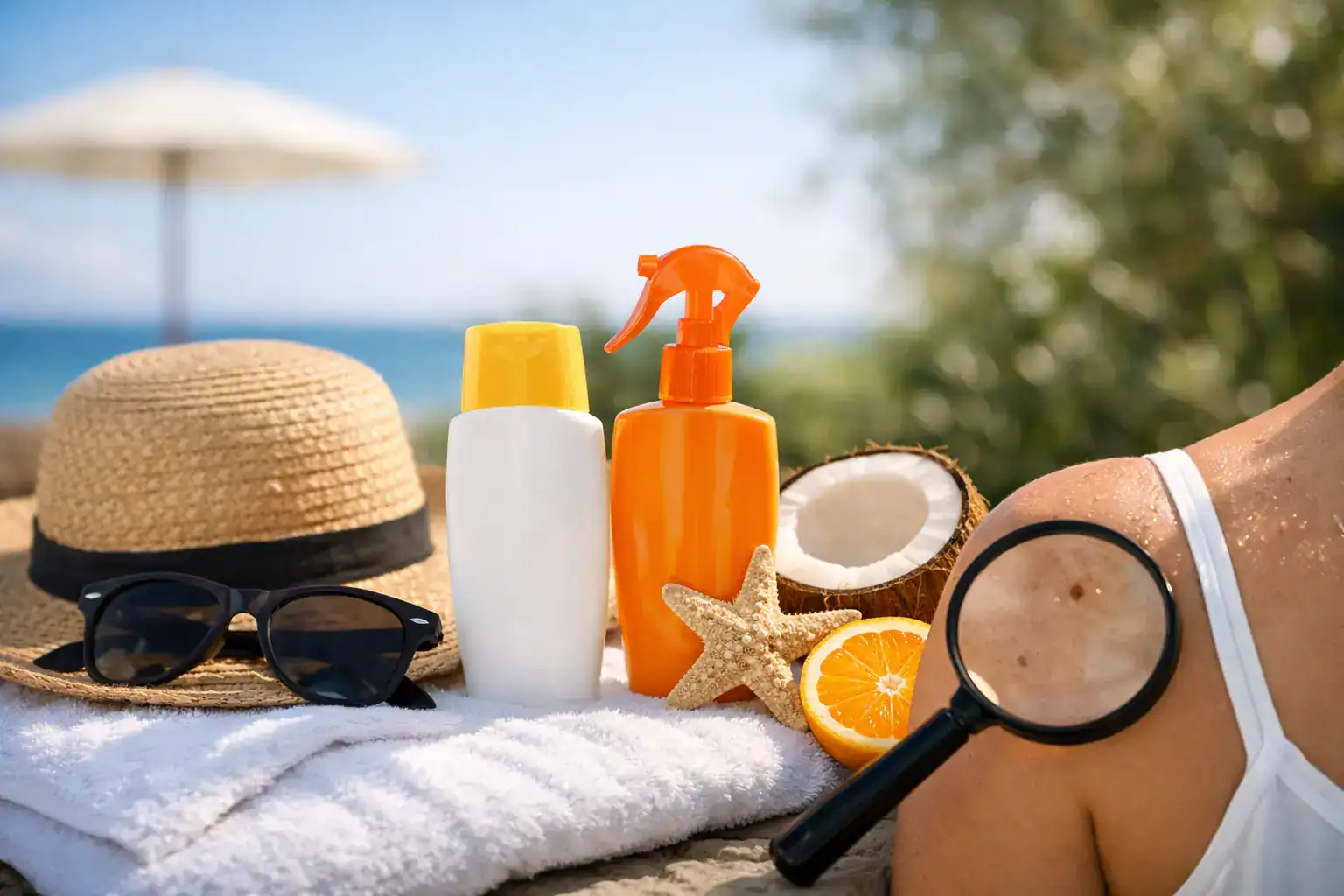
A painful sunburn at the lake, a quick walk from the parking lot, a season of youth sports, or years of driving with one arm in the sun – skin damage usually builds in ordinary moments. That is why a skin cancer prevention guide should focus less on rare events and more on daily habits that are realistic to maintain.
Skin cancer is common, but prevention is not complicated. The challenge is consistency. Patients often know they should wear sunscreen, yet many still miss the areas most likely to burn, reapply too late, or assume cloudy weather offers enough protection. Effective prevention comes from a combination of sun protection, skin awareness, and regular professional screening when appropriate.
A practical skin cancer prevention guide starts with UV exposure
Most skin cancers are linked to ultraviolet, or UV, exposure over time. That includes obvious high-risk situations such as beach trips and outdoor work, but it also includes everyday exposure during errands, sports, gardening, walking the dog, and commuting. In North Georgia, strong sun and long outdoor seasons can make those small exposures add up quickly.
UV damage does not look the same in every person. Fair skin tends to burn more visibly, but darker skin tones can still develop skin cancer and often experience delayed diagnosis because suspicious lesions may be overlooked. Prevention recommendations should apply to everyone, regardless of skin tone, age, or how easily they tan.
A useful rule is simple: if you are spending time outdoors during daylight hours, think about protection before you walk out the door. Waiting until your skin feels hot means damage has already started.
The daily habits that matter most
Sunscreen remains one of the most effective prevention tools, but only when used correctly. Choose a broad-spectrum sunscreen with SPF 30 or higher and apply it generously to exposed skin. Broad-spectrum means it protects against both UVA and UVB rays, which both contribute to skin damage and skin cancer risk.
Application matters as much as product choice. Commonly missed areas include the ears, scalp part, back of the neck, chest, tops of the feet, and hands. Lip protection also matters, especially for people who spend long periods of time outdoors. If you wear makeup or moisturizer with SPF, that may help, but it is often not enough by itself for extended sun exposure.
Reapplication is where many prevention plans fail. Sunscreen should be reapplied every two hours when outdoors, and sooner after swimming or sweating. One morning application is not all-day protection.
Protective clothing adds another layer that does not wear off. Wide-brim hats provide better coverage than baseball caps because they help shield the ears, face, and neck. Sunglasses with UV protection help protect the delicate skin around the eyes. Lightweight long sleeves, pants, and UPF-rated clothing can be especially useful for golfers, runners, gardeners, and parents watching hours of weekend games.
Shade helps, but it has limits. Sitting under an umbrella or pavilion reduces direct sun, yet reflected UV exposure can still reach the skin. Shade should be part of a prevention plan, not the only strategy.
When timing makes a difference
UV exposure tends to be strongest in the middle of the day, generally from 10 a.m. to 4 p.m. If you can shift outdoor activity earlier or later, that lowers cumulative exposure. For many people, that is not always practical. Construction workers, student athletes, coaches, landscapers, and busy families often have to be outside when the sun is strongest.
That is where planning matters. If you cannot avoid peak UV hours, build protection into the routine. Keep sunscreen in the car, sports bag, golf bag, and pool tote. Put hats where they are easy to grab. Choose clothing that works for the activity rather than relying on intentions that disappear once the day gets busy.
The UV index can also be helpful, but patients do not need to monitor it obsessively. If it is daytime and you are outside, default to protection. That mindset is usually more reliable than trying to guess whether a particular day feels sunny enough to matter.
Skin cancer prevention guide for children and teens
Sun protection habits are especially important early in life because childhood and adolescent UV exposure can increase skin cancer risk later on. That does not mean children need to stay indoors. It means families should make protection routine.
For younger children, that usually means a combination of shade, hats, sun-protective swimwear, and sunscreen applied by an adult. For school-age kids and teens, independence creates a new challenge. They may forget sunscreen, dislike how it feels, or avoid protective clothing because it is less convenient.
The best approach is usually practical rather than perfect. A sunscreen they will actually use is better than an expensive formula they avoid. Stick formulations may work well for the face. Spray products can be convenient for sports, though they still need thorough and even application. Teenagers who are concerned about acne should know that many noncomedogenic sunscreen options are designed for acne-prone skin.
Indoor tanning deserves special mention. Tanning beds significantly increase skin cancer risk and are not a safer alternative to natural sun exposure. For teens and young adults who want a tanned look, sunless tanning products are the safer cosmetic option.
Know your personal risk factors
Some people need to be even more proactive because their baseline risk is higher. That includes individuals with a personal history of skin cancer, a strong family history of melanoma, many moles, atypical moles, fair skin that burns easily, significant cumulative sun exposure, or a history of blistering sunburns. Patients with immune suppression also face increased risk.
If you fall into one of these categories, prevention should include more than sunscreen. It should also include regular skin checks at home and appropriate professional skin exams. The right exam schedule depends on your history, skin type, and risk profile. One patient may need annual exams, while another may need closer follow-up.
This is also where expert evaluation matters. Not every spot is dangerous, but some early skin cancers are subtle. A lesion that seems minor to a patient may deserve a closer look under trained eyes.
What to watch for between visits
Prevention includes early detection. Skin cancer found early is often simpler to treat and less likely to require extensive surgery or reconstruction. Patients should pay attention to new, changing, bleeding, nonhealing, or unusual spots.
For moles, the ABCDE rule remains useful: asymmetry, irregular border, varied color, diameter larger than about 6 millimeters, and evolving over time. That said, melanoma does not always follow a textbook pattern. A spot that looks distinctly different from your other moles, sometimes called the ugly duckling sign, is worth evaluation.
Nonmelanoma skin cancers can look different. Basal cell carcinoma may appear as a pearly bump, a sore that does not heal, or a pink patch. Squamous cell carcinoma may present as a scaly red patch, tender bump, crusted lesion, or wart-like growth. In darker skin tones, lesions may be pigmented or appear in less expected locations, including the palms, soles, or nails.
Monthly self-checks can help, especially for higher-risk patients. Use good lighting and a mirror, and do not ignore the scalp, back, buttocks, feet, or nails. If a spot is changing and you are not sure whether it matters, that uncertainty alone is a reasonable reason to schedule an exam.
Screening is not one-size-fits-all
A full-body skin exam is a valuable tool, but frequency should be individualized. Some adults with average risk may need periodic exams based on age, sun exposure, and medical history. Others need more regular surveillance because they have had prior skin cancers or precancerous lesions.
Professional screening is also helpful for patients who simply have a hard time monitoring their own skin. If you have many moles, limited visibility of certain areas, or a lesion in a difficult spot such as the scalp or back, a dermatology visit can add confidence and clarity.
For families with aging parents, routine skin exams can be especially useful. Older adults often have accumulated decades of sun exposure, and skin cancers may be dismissed as age spots, rough patches, or sores from minor trauma. Early evaluation can prevent delays in care.
Prevention should fit real life
The best prevention plan is the one you can sustain. For a busy parent, that may mean keeping sunscreen by the front door and in every bag. For an outdoor worker, it may mean UPF shirts, scheduled reapplication, and wide-brim sun protection. For a retiree who enjoys gardening or golf, it may mean combining protective clothing with regular skin exams.
If you have a history of skin cancer or a concerning lesion, specialized care matters. Practices such as Goodman Dermatology can help patients move from prevention to screening, diagnosis, and treatment within one system, which is often more efficient when care needs change.
No one prevents every ray of sun exposure, and perfection is not the goal. What matters is lowering risk in the places where daily habits make the biggest difference. A few steady routines, started now and repeated often, can protect your skin for years to come.