
Melanoma Treatment
This form of skin cancer, which appears on sun-exposed parts of the skin, is the most serious form of skin cancer, but it is easily treated when caught early.
What Is Melanoma?
Melanoma is the most serious form of skin cancer. It develops in melanocytes, the cells that produce pigment or melanin in the skin. Melanoma most often appears on sun-exposed areas like the face, arms, and back, but it can occur anywhere on the body, even in places that receive little or no sun exposure.
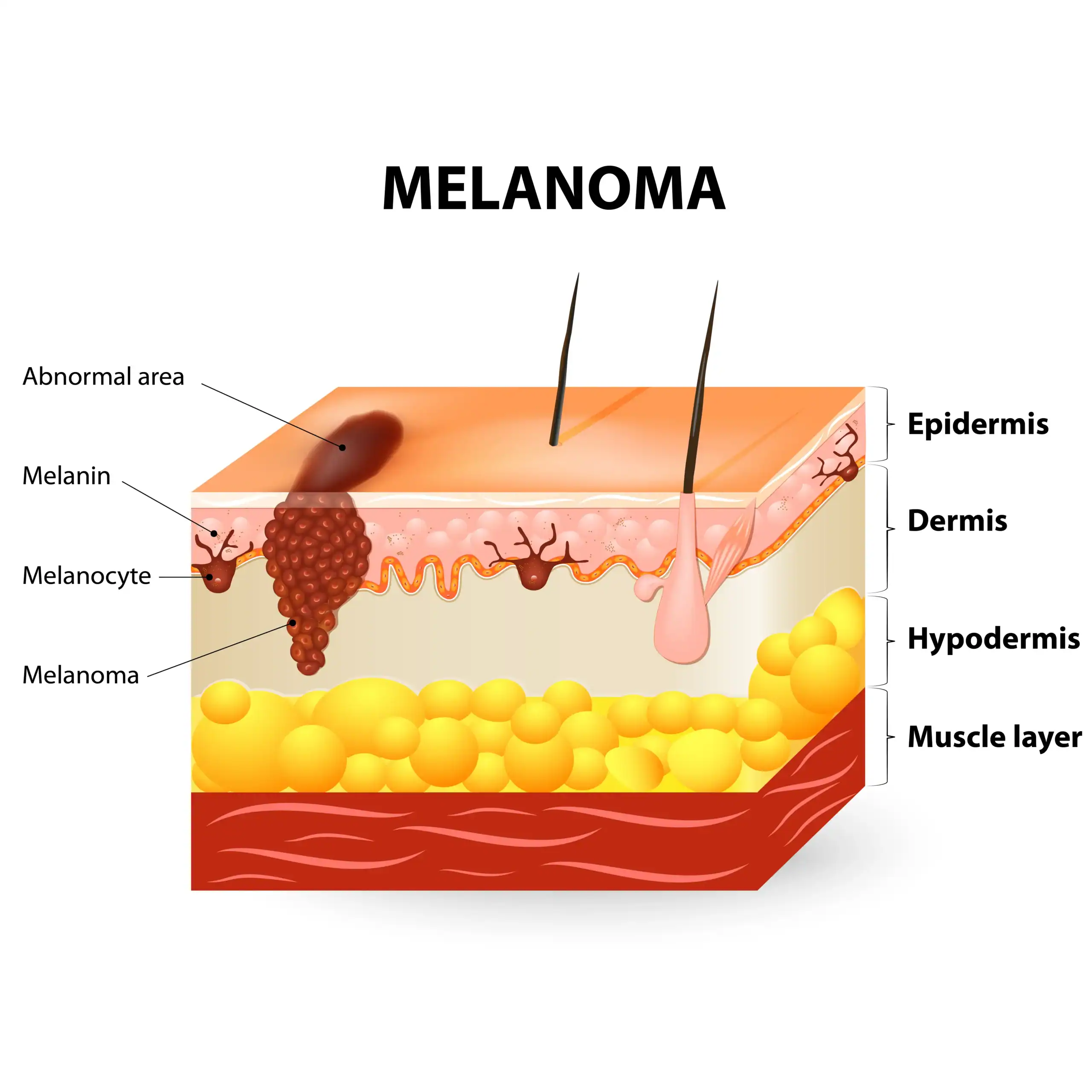
Melanoma FAQs
The primary cause of melanoma is damage to skin cells from ultraviolet (UV) radiation, either from the sun or tanning beds.
Risk factors include:
- History of sunburns or tanning bed use
- Fair skin, light eyes, or red/blonde hair
- A large number of moles
- Family history of melanoma
Anyone can develop melanoma, but UV exposure significantly increases a person’s risk.
Melanoma often appears as a new mole or or a mole that changes. One of the most common warning signs is a spot that changes in size, shape, or color.
Dermatologists often use the ABCDE rule for identifying moles that could be cancerous.
- Asymmetry: One half looks different than the other.
- Border irregularity
- Color variation
- Diameter: Larger than about 6 mm, or the size of a pencil eraser.
- Evolving: Meaning changing over time.
Other signs patients should look out for include moles that itch, bleed, or a lesion that looks different from others on your skin.
Melanoma most commonly develops on skin exposed to ultraviolet (UV) light, such as the face, arms, legs, and back. However, it can also form in less obvious places, including:
- Palms of the hands
- Soles of the feet
- Under fingernails
- Scalp or genitals
These less visible melanomas are especially important to watch for during skin exams.
Yes. Melanoma is considered the most serious type of skin cancer because it can grow quickly and spread (metastasize) to other parts of the body if not treated early.
However, when detected early, melanoma is highly treatable and often curable.
Diagnosis typically begins with a skin exam. If a suspicious lesion is found, a biopsy is performed to determine whether cancer is present.
If melanoma is confirmed, additional tests may be used to determine the stage, including evaluating:
- Tumor thickness
- Spread to nearby lymph nodes
- Whether the cancer has spread beyond the skin
Melanoma is staged from 0 to 4:
- Stage 0–1: Early, thin melanomas with high treatment success
- Stage 2–3: Deeper tumors or spread to nearby lymph nodes
- Stage 4: Cancer has spread to distant organs
Staging helps guide treatment decisions and prognosis.
While not all melanomas can be prevented, you can reduce your risk by:
- Limiting sun exposure, especially during peak hours
- Wearing protective clothing and sunscreen
- Avoiding tanning beds
- Performing regular skin self-exams
Early detection is one of the most important factors in successful treatment.
You should schedule an evaluation if you notice:
- A new or unusual skin lesion
- A mole that changes in size, shape, or color
- Any spot that bleeds, itches, or does not heal
Early evaluation can make a critical difference in treatment success.