
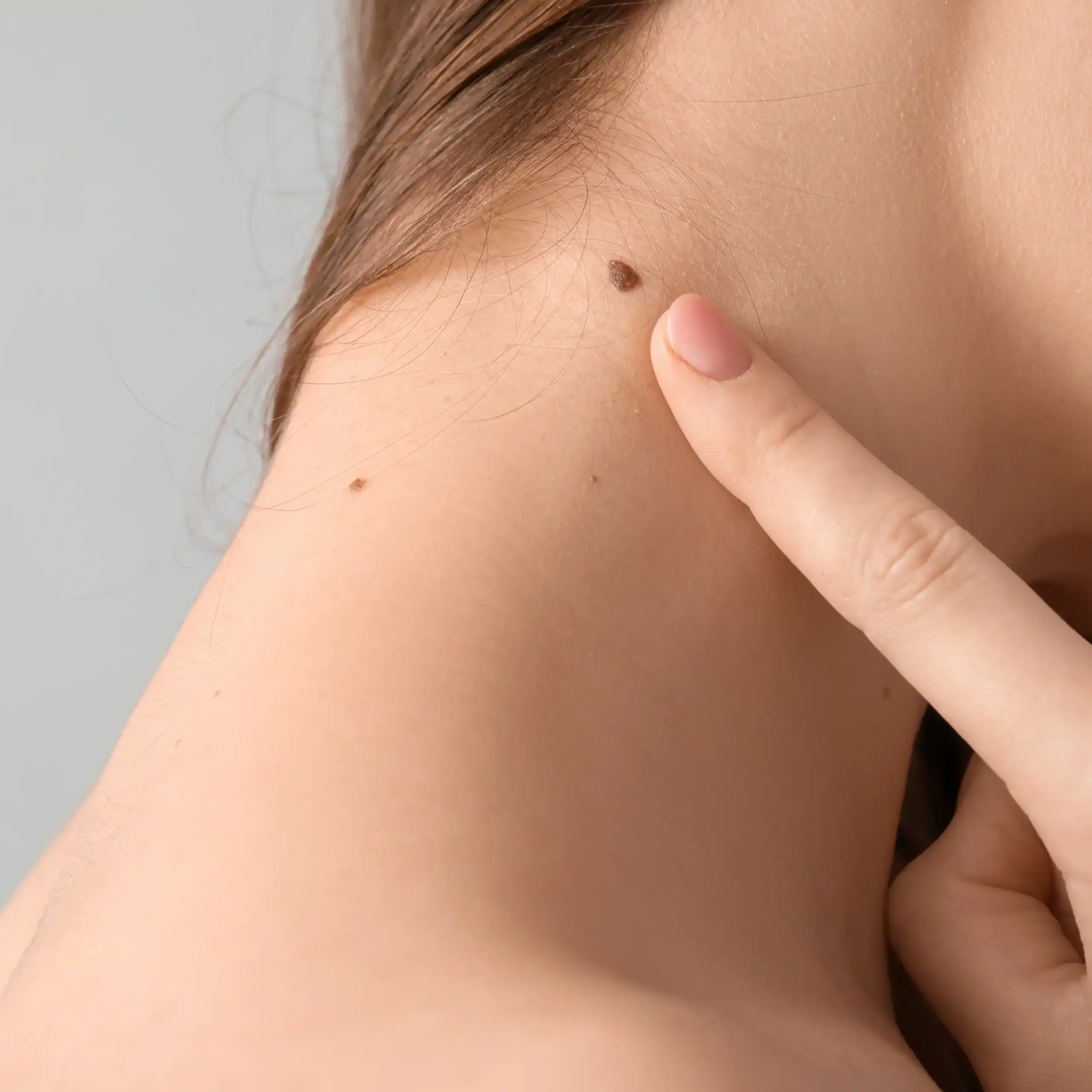
Mole Removal
Moles can be unsightly, but they are often benign. However, if a mole shows signs of skin cancer and is discovered early, our board-certified providers can perform numerous techniques for removal.
Why Moles Change
Moles, also known as melanocytic nevi or pigmented nevi, are pigmented areas or spots on the skin. Melanocytes, the cells that give skin its color, often form benign moles. However, these spots can change in color or shape, or feel tender to the touch.
Changes can occur in the skin due to heredity or after exposure to ultraviolet rays from the sun or tanning beds. The appearance of a mole can indicate a precancerous condition or skin cancer. It’s essential to contact the dermatologist right away when a new lesion appears or an existing one changes in color, border, or sensitivity.
How To Spot an Abnormal Mole
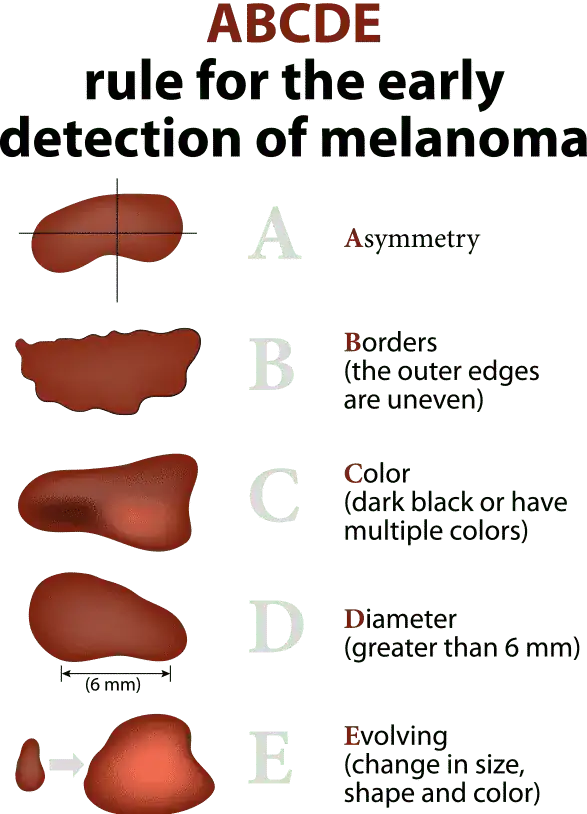
Abnormal moles are moles that can become cancer. Researchers from Johns Hopkins University cite the ABCD acronym for identifying moles that can be abnormal or cancerous. Your dermatology team will consider these rules during your annual full-body skin exam, but you can also use them when you do your own monthly skin checks.
Consider these indicators:
- Asymmetry: An uneven shape can help the patient and physician identify an early problem. Not all asymmetrical moles are cancer, but it’s important to perform self-checks and report any concerns to the doctor.
- Border: An uneven, feathered, notched, or wavy border around any mole should be checked.
- Color: The mole’s color can be an early warning symptom. Most moles are a single color. When a mole is partially two or more colors, it’s time to call the dermatologist. Some unusual colors, including blue, white, or black, may be early warning symptoms of a serious skin cancer called melanoma.
- Diameter: The mole’s width can also help to identify a problem. If the mole is bigger than the size of a pencil eraser (about 6 mm), it’s time to check in with your dermatologist.
- Evolution: Any mole that changes should be checked. When an existing mole grows quickly or appears and then grows quickly, contact Goodman Dermatology.
Mole Removal FAQs
Pigmented nevi can look flesh-colored on individuals with light skin. The lesions can also present in a range of colors, including black, blue, brown, yellow, or even white. It’s common practice for dermatologists to suggest that patients get new melanocytic nevi removed when they first appear. Our Goodman Dermatology team makes discovering new moles easier through an annual full-body skin exam.
According to the Skin Cancer Foundation, melanocytic nevi that appear after sun exposure are less concerning than genetic varieties. These lesions may indicate melanoma, a virulent form of skin cancer. Most melanoma lesions do not cause pain, but it’s important to report any pigmented nevi that become painful or tender. Because melanoma burrows into the skin cells, it can spread to other parts of the body through the blood or lymph systems. Melanoma lesions tend to present most frequently on the legs in women, the torso in men and on the back of both sexes. However, this form of cancer can appear and then spread to any part of the body.
The Melanoma Research Foundation says that melanocytes can progress from a benign to cancerous state fairly quickly. It’s important to perform regular self-checks and let the dermatologist know about any changes to pigmented nevi or new lesions. The dermatologist should perform skin cancer checks, such as full-body skin checks, at least once a year or more often (usually once every three to six months) if the patient is at risk. The patient should also perform self-exams at least once per month. It’s impossible for the patient to determine whether he or she has skin cancer simply by looking at the lesions. A biopsy is necessary.
The Skin Cancer Foundation recommends looking for the “A-B-C-D-E’s” of abnormal moles: asymmetry; border; color; diameter (greater than one-fourth inch); and evolution (changes). See the graphic above for a visual approach to the rules. Any of these symptoms may indicate a precancerous or cancerous lesion. Call the dermatologist right away to report these symptoms.
There are several ways to remove the lesions. The doctor may perform an excision to surgically remove the nevi. The patient will probably need stitches after the procedure because it’s necessary to remove a portion of the surrounding, apparently healthy-looking skin along with the mole.
The lesion may also be cauterized. The physician uses a razor-type tool to shave the nevi from the skin. Afterwards, the remaining skin is sealed by burning or freezing to remove any remaining dangerous cells. There’s usually no need for stitches after the procedure. The patient is likely to have a scar when the skin heals.
Laser removal of the nevus may also be an option and can be very effective. Pigmented melanocyte cells are destroyed by the laser, and the body reabsorbs the dead cells. Although the skin may look red or inflamed after laser removal, the patient’s skin is less likely to suffer scarring.
The patient’s comfort is always a high priority for the Goodman Dermatology team. A topical anesthetic is provided prior to removing a pigmented nevus or nevi. Discuss any concerns about treatment recommendations during the office consultation. We believe patient education is an important part of every visit.
A patient with multiple melanocytic nevi may need a brief recovery period. It’s important to keep the skin very clean after the lesions are removed through any method. Skin will heal faster if the area is covered with an appropriate post-surgical dressing. Since rest will speed recovery and prevent the skin from stretching, it’s a good idea to avoid intense physical activity after this type of procedure.
The excision or removal of a mole doesn’t prevent new lesions from forming, sometimes in the same spot. Vigilance is required to keep the skin clear of new lesions in the future.
It’s important to avoid the sun as much as possible. Goodman Dermatology and providers will recommend products, including high SPF sunscreens, to patients with the tendency to freckle or form pigmented nevi. Many patients purchase sun-protective clothing to help protect their skin from damaging UV light.
If you are seeking mole removal, contact us today. Goodman Dermatology serves north metro Atlanta, North Georgia and many surrounding cities.