
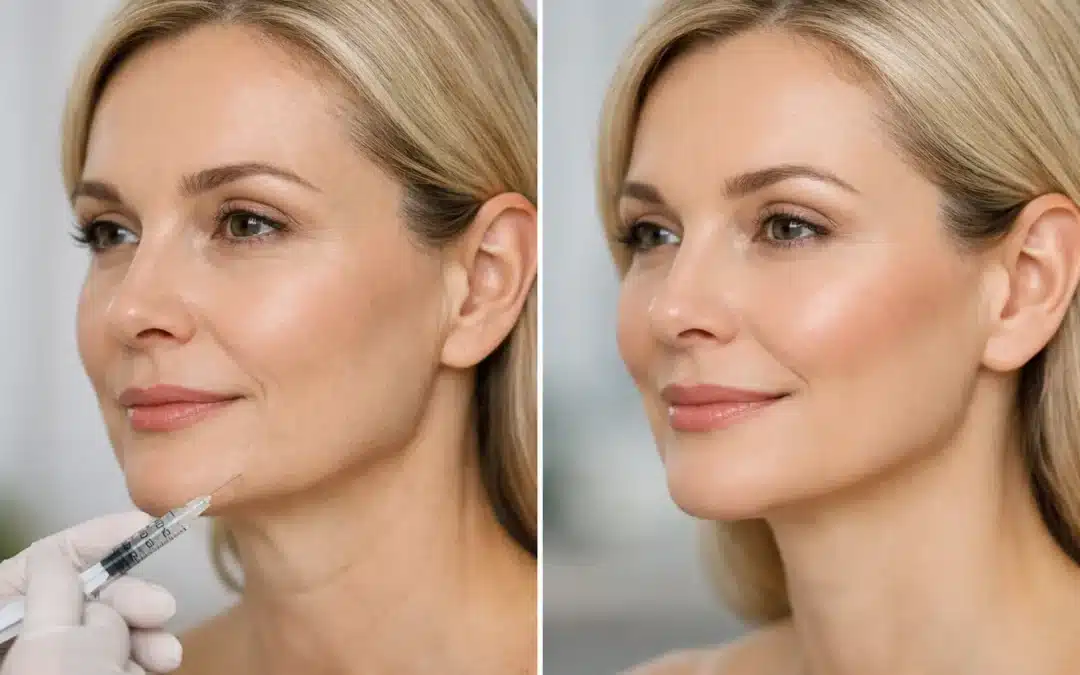
If you are looking at cheek filler before and after photos, you are probably asking a more practical question than most galleries answer: will this treatment make me look refreshed, or simply look filled? That distinction matters. Well-placed cheek filler can restore structure, soften early sagging, and create a more balanced profile. Poorly planned treatment can do the opposite.
For many patients, the cheeks are one of the first areas to show volume loss. The face can start to look flatter, heavier around the lower face, or more tired even when the skin itself is in good condition. Cheek filler is designed to address that loss of support with natural, refined results when the treatment plan matches your facial anatomy.
What cheek filler before and after really shows
The most meaningful cheek filler before and after change is not usually dramatic fullness. It is often better contour, improved light reflection across the midface, and a more supported appearance around nearby areas like the under-eyes and nasolabial folds.
That is why good results can be harder to describe than bad ones. Patients often say they look less tired or more lifted, but friends may not immediately know why. In many cases, that is the goal. A successful outcome should fit your face, your age, and your preferences rather than follow a one-size-fits-all look.
Before treatment, the cheeks may appear flat, deflated, or uneven. Some patients have age-related volume loss. Others have naturally less cheek projection and want more contour. After treatment, the cheeks often appear more defined and proportionate, with subtle support that helps the entire face look more balanced.
Who tends to benefit most from cheek filler
Cheek filler can work well for adults who want to restore lost volume, enhance cheek definition, or improve facial balance without surgery. It is especially useful when the concern is structural rather than purely skin-deep.
Patients in their 30s and 40s may notice early hollowing or descent in the midface. Patients in their 50s and beyond may see more significant volume loss and changes in skin elasticity. Younger adults sometimes pursue cheek filler for contouring, but even then, the best approach is usually conservative. More product is not always better.
It also depends on the underlying issue. If skin laxity is more advanced, filler alone may not provide the result a patient is hoping for. If the concern is swelling under the eyes, prominent jowls, or significant lower-face heaviness, a broader treatment plan may make more sense than focusing only on the cheeks.
How treatment is planned for natural-looking results
Cheek filler is not simply placed where volume looks low. A trained injector assesses facial shape, bone structure, skin quality, symmetry, and how the cheeks relate to the temples, under-eyes, jawline, and mouth.
This matters because the cheeks are a key support point for the face. Adding volume in the right location can improve contour and soften shadowing. Adding it in the wrong location can create width, puffiness, or an unnatural front-facing appearance.
Product selection also matters. Different hyaluronic acid fillers have different firmness, flexibility, and lift capacity. Some are better for structural support along the cheekbone, while others are better for soft volume replacement. The right choice depends on your anatomy and your goals.
An experienced injector will also think about dose. One of the most common reasons patients dislike filler is that they expected subtle enhancement and received too much. A staged approach often produces better cheek filler before and after results than trying to do everything in one visit.
What to expect at your appointment
Treatment is typically performed in the office and does not require general anesthesia. After your consultation and facial assessment, the skin is cleansed and marked. Depending on the treatment plan, your provider may use a needle, a cannula, or both.
Most patients describe cheek filler as very tolerable. You may feel pressure, a brief pinch, or mild stinging, but treatment is usually quick. Many fillers contain lidocaine to improve comfort during placement.
You may see an immediate change, but that first look is not your final result. Mild swelling is common, and the cheeks can appear slightly fuller for the first few days. This is one reason same-day before and after photos can be misleading.
Cheek filler before and after over time
A realistic timeline helps patients judge results more fairly. Right after treatment, you may notice lift and contour, but also some swelling. In the first 24 to 72 hours, the area may feel firm or appear a little overcorrected. Bruising is possible, especially if you are prone to it.
By about one to two weeks, swelling usually settles enough to evaluate the true result. At that point, the cheeks should look more natural and integrated with the rest of the face. If refinement is needed, that is often the best time to discuss it.
Longer term, results can last many months, though duration varies by product, metabolism, and placement. Some patients maintain results for closer to a year, while others notice changes earlier. The goal is not permanent change. It is controlled, adjustable improvement.
Common concerns patients have after treatment
The biggest worry most patients have is looking unnatural. That concern is reasonable. The cheeks are central to facial shape, so poor placement is noticeable. The best protection against an overdone result is careful assessment, conservative dosing, and treatment by a qualified medical professional with experience in facial anatomy.
Patients also ask about asymmetry. Mild differences between sides are common before treatment and can remain afterward because natural faces are not perfectly symmetrical. Filler can improve balance, but it does not create exact mirror-image features.
Another concern is migration. While filler complications are widely discussed online, true migration is less likely when the right product is used appropriately and not overfilled. Technique and injector judgment make a significant difference.
When cheek filler may not be the best option
Cheek filler is a useful treatment, but it is not the right answer for every face. If your main concern is severe skin laxity, heavy lower-face sagging, or deep structural aging, filler may offer only partial improvement. In those cases, combining treatments or considering a different approach may be more effective.
Patients with certain medical conditions, active skin infections near the treatment area, or a history of significant filler complications may need additional evaluation. This is another reason consultation matters. Cosmetic treatment should still be medical care, with proper screening and clear expectations.
It is also worth saying that filler should not be used to chase trends. Cheek shape that looks striking on social media may not look balanced in everyday life, especially across different angles and lighting. The best result is one that still looks like you.
Choosing the right provider for cheek filler before and after results
Before and after photos are helpful, but they are only one part of the decision. Look for a practice that understands both cosmetic outcomes and the medical side of injectable treatment. Training, anatomical expertise, patient evaluation, and a conservative aesthetic approach all matter.
For patients who want expert skin care and cosmetic treatment in one setting, Goodman Dermatology offers access to board-certified dermatology expertise and personalized aesthetic care designed around natural-looking results. That combination can be especially valuable when you want a provider who sees the full picture, not just the syringe.
A strong consultation should leave you with a clear sense of what filler can do, what it cannot do, how much product may be appropriate, and what recovery will look like. If a plan feels rushed or overly aggressive, it is reasonable to ask more questions.
The result worth aiming for
The best cheek filler before and after result is not a different face. It is a face that looks more rested, supported, and in proportion. For some patients, that means subtle restoration. For others, it means gentle contour. Either way, the most satisfying outcomes usually come from thoughtful treatment, not maximum volume.
If you are considering cheek filler, focus less on dramatic transformations and more on whether the result looks believable in motion, in daylight, and over time. That is where good aesthetic medicine tends to show itself.