
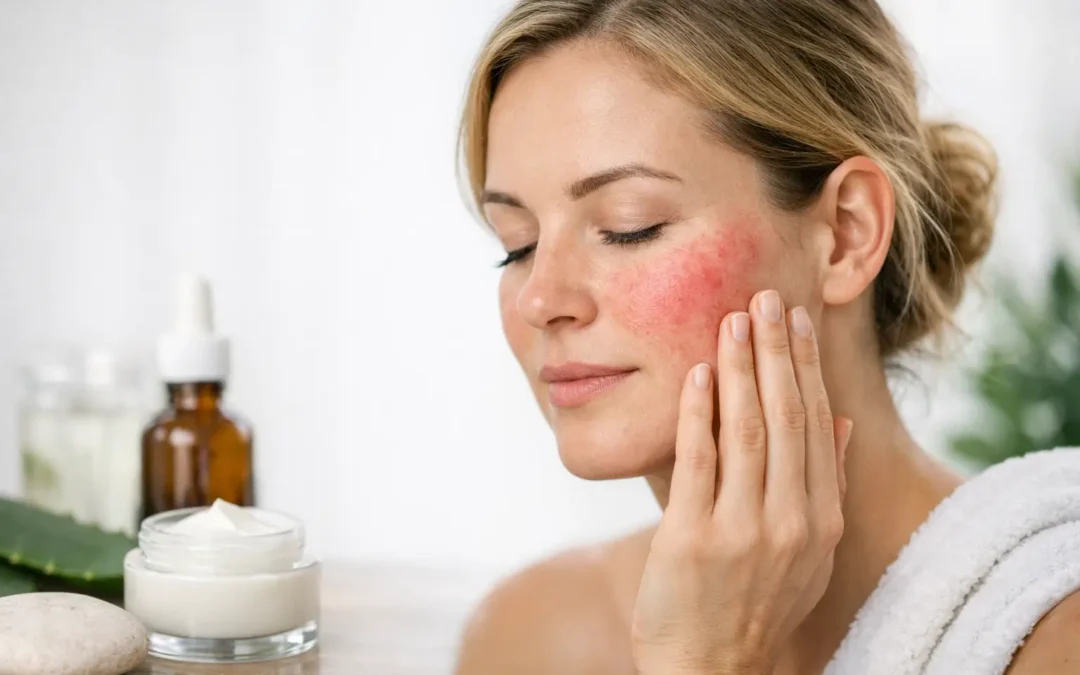
Rosacea redness rarely stays simple. What starts as easy flushing can turn into daily background redness across the cheeks, nose, chin, or forehead, often with burning, stinging, bumps, or visible blood vessels. Many patients try acne products, harsh exfoliants, or over-the-counter redness remedies first, only to make their skin more reactive.
If you are wondering how to treat rosacea redness, the most effective approach is usually not one product or one procedure. It is a plan that reduces inflammation, protects the skin barrier, avoids triggers, and uses targeted treatment when needed. The right plan depends on whether your redness is mostly flushing, constant background redness, acne-like breakouts, or visible capillaries.
What rosacea redness really is
Rosacea is a chronic inflammatory skin condition. In many patients, the earliest sign is flushing that lasts longer than it used to. Over time, that flushing can become more persistent redness. Some people also develop papules and pustules that resemble acne, while others notice enlarged surface blood vessels or eye irritation.
That distinction matters because redness from rosacea is not the same as temporary irritation or a one-time rash. Rosacea-prone skin tends to be more sensitive, more reactive to heat and skin care products, and more likely to flare when the skin barrier is disrupted. Treating it well means calming the inflammation underneath, not just masking the color on the surface.
How to treat rosacea redness at home
Daily habits make a real difference, especially when skin feels hot, dry, or easily irritated. A gentle routine is often the starting point.
Use a mild cleanser once or twice a day, ideally one that does not contain scrubs, strong acids, or heavy fragrance. Hot water can worsen flushing, so lukewarm water is usually better. After cleansing, apply a plain moisturizer that supports the skin barrier. Many patients with rosacea do best with simple, non-irritating formulas rather than products marketed as intense anti-aging treatments.
Sun protection is essential. Ultraviolet exposure is one of the most common rosacea triggers, and repeated exposure can make persistent redness harder to control. A broad-spectrum sunscreen worn every day is one of the most practical ways to reduce preventable flares. For very sensitive skin, mineral formulas with zinc oxide or titanium dioxide are often easier to tolerate.
It also helps to scale back products that create unnecessary irritation. Retinoids, exfoliating acids, alcohol-based toners, and heavily fragranced products are not always off-limits forever, but they often need to be paused or used carefully during active flares. If your skin burns when you apply skin care, that is a sign the routine may be too aggressive.
Identifying triggers without overcomplicating life
Rosacea triggers are real, but they are not identical for everyone. Common triggers include sun, heat, exercise, spicy foods, alcohol, emotional stress, hot beverages, and irritating skin care products. The goal is not to build your life around avoiding every possible trigger. It is to notice your own pattern and reduce the ones that clearly make your skin worse.
A simple symptom journal can help. If redness predictably spikes after outdoor heat, red wine, or a long hot shower, that gives you something specific to adjust. On the other hand, if a suspected trigger does not consistently cause flares, there is no need to eliminate it automatically.
This is one of the biggest trade-offs in rosacea care. Trigger avoidance can help, but it usually does not replace medical treatment in patients with persistent redness. It works best as part of a broader plan.
Prescription treatment for rosacea redness
When home care is not enough, prescription treatment can be very effective. The best option depends on the type of rosacea you have.
For persistent facial redness, dermatologists may prescribe topical medications that constrict surface blood vessels and temporarily reduce visible redness. These products can be helpful for patients who want improvement during the day for work, events, or routine daily confidence. They can work well, but they are not a cure, and results vary by skin type and severity.
If rosacea includes inflammatory bumps and pustules, treatment often shifts toward reducing inflammation. Topical medications such as metronidazole, azelaic acid, or ivermectin are commonly used. In some patients, oral antibiotics such as doxycycline are added for anti-inflammatory benefit, especially when flares are more widespread or resistant.
This is where self-diagnosis can get tricky. Rosacea can overlap with acne, seborrheic dermatitis, contact dermatitis, and lupus-related facial redness. If treatment has not worked or your skin is worsening, it is worth getting a clear diagnosis before continuing to experiment.
Laser and light treatments for visible redness
For many patients, the most frustrating part of rosacea is the redness that does not fully respond to creams. When broken capillaries or persistent background redness are the main concern, laser and light-based treatments can play an important role.
Vascular lasers and intense pulsed light, or IPL, are often used to target visible blood vessels and diffuse redness. These treatments can improve overall tone and reduce flushing over time. They are especially useful when the redness is structural, meaning it is tied to enlarged superficial vessels rather than a short-term flare alone.
Results are often noticeable, but they usually require a series of treatments and maintenance may be needed. Patients should also understand that laser and light procedures do not prevent every future flare. If triggers, inflammation, and barrier disruption continue, redness can return. The best outcomes often come from combining in-office treatment with a medically guided skin care routine.
Skin care choices that help rather than hurt
Patients often ask whether they need a long rosacea routine. Usually, they do not. A simpler approach is often better.
A gentle cleanser, moisturizer, and sunscreen form the core. If a prescription cream is part of your treatment plan, it can be added without turning the routine into a 10-step process. Green-tinted makeup or redness-neutralizing products may help cosmetically, but they should not sting or feel heavy on the skin.
When testing a new product, introduce one at a time. If you try three new products in one week and your skin flares, it becomes difficult to know which one caused the problem. Rosacea management is often more successful when changes are deliberate and gradual.
When redness means it is time to see a dermatologist
Some rosacea redness is mild and occasional. Some is persistent enough to affect comfort, appearance, and confidence every day. It is a good time to schedule an evaluation if redness is lasting longer, spreading, burning, or coming with bumps, eye symptoms, or visible blood vessels.
You should also be seen if over-the-counter products keep failing, if acne treatments are making your skin worse, or if redness is interfering with work, social activities, or sleep. Rosacea is not dangerous in the way skin cancer can be, but it is a medical condition that deserves proper care.
A dermatologist can help determine whether your redness is truly rosacea, identify the subtype, and build a treatment plan that fits your skin and schedule. That may include prescription medication, procedural treatment, barrier-repair skin care, or a combination of all three. For patients balancing busy work and family routines, that kind of targeted plan often saves time, money, and frustration.
What to expect from treatment over time
Rosacea is usually manageable, but it is not typically something that disappears for good after one treatment. That is why realistic expectations matter.
Most patients improve in stages. First, the skin becomes less irritated and less likely to flare. Then background redness may start to soften. If laser or light treatment is used, visible vessels may improve further. The process is often gradual, and maintenance is normal.
That does not mean treatment is failing. It means rosacea care is about control, not perfection. The right approach can make skin feel calmer, look more even, and become much easier to live with.
For patients across North Georgia looking for expert evaluation and treatment options, Goodman Dermatology offers medical and cosmetic care designed to address both the condition itself and the visible redness that often comes with it. The next best step is not trying another random product. It is getting a plan that matches your skin.
If rosacea redness has become part of your daily routine, it does not have to stay that way. Steady improvement usually starts with a clear diagnosis, gentler habits, and treatment built for the kind of redness you actually have.