
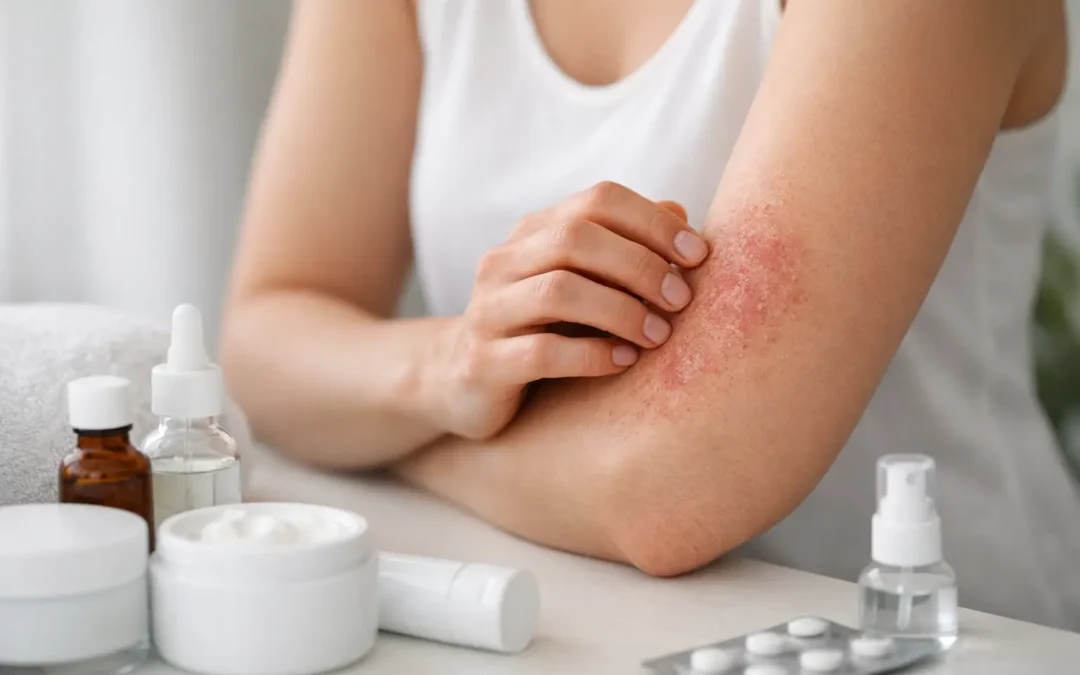
A child who slept fine last week is suddenly up scratching at 2 a.m. An adult who thought their skin was under control develops red, burning patches after one stressful week or a change in weather. Eczema flare-ups often feel abrupt, but they usually happen when the skin barrier has been under pressure for days or even weeks.
The best treatment for eczema flare ups is rarely one single product. In most cases, the most effective approach combines fast inflammation control, intensive moisturization, trigger management, and a treatment plan matched to the patient’s age, skin type, and flare severity. That is why some mild flares improve with over-the-counter care, while others need prescription treatment and closer dermatology follow-up.
What actually works during an eczema flare-up
When eczema flares, the skin barrier is inflamed and less able to hold moisture in or keep irritants out. That leads to a cycle of itching, scratching, and worsening irritation. The goal of treatment is to interrupt that cycle quickly.
For many patients, the first-line treatment is a combination of a thick moisturizer and an anti-inflammatory medication. Moisturizers help repair the barrier, while anti-inflammatory treatment reduces redness, itching, and swelling. If only one part of that plan is used, results are often slower and less reliable.
A heavy, fragrance-free cream or ointment usually works better than a light lotion during a flare. Ointments and richer creams create more protection and reduce water loss from the skin. Applying them immediately after bathing, while the skin is still slightly damp, tends to improve results.
Topical corticosteroids are still one of the most effective treatments for many eczema flares. They can calm inflammation quickly, especially when the flare is moderate, widespread, or causing significant itching. The right strength depends on where the eczema is located, how severe it is, and who is being treated. Thin-skinned areas such as the face, eyelids, groin, and skin folds usually require more caution than the arms, legs, or trunk.
That is where treatment decisions matter. A steroid that is too weak may not control the flare, but a steroid that is too strong or used too long can increase the risk of side effects such as thinning skin, irritation, or stretch marks. Used correctly under medical guidance, topical steroids remain an important and evidence-based option.
Best treatment for eczema flare ups by severity
The best treatment for eczema flare ups depends on how intense the flare is and how often it happens.
Mild flares
A mild flare may involve dry, itchy, pink patches without cracking or sleep disruption. In these cases, diligent skin care may be enough, especially if treatment starts early. Frequent use of a thick moisturizer, short lukewarm showers, gentle fragrance-free cleansers, and avoiding obvious triggers can sometimes settle the skin before the flare becomes more severe.
Some patients also benefit from nonsteroidal prescription creams, particularly if eczema affects sensitive areas or if flares happen often enough that repeated steroid use becomes less ideal.
Moderate flares
Moderate eczema usually causes more noticeable redness, itching, scaling, or sleep disturbance. At this stage, prescription topical treatment is often needed. Topical corticosteroids are commonly used, and some patients are prescribed steroid-sparing medications such as topical calcineurin inhibitors or other nonsteroidal anti-inflammatory creams.
Wet wrap therapy can also help in selected cases. This involves applying medication and moisturizer, then covering the area with a damp layer and a dry outer layer for a short period. It can improve medication absorption and reduce itching, but it should be done based on professional instructions, especially in children.
Severe or persistent flares
If eczema is painful, weeping, crusted, widespread, infected-looking, or interfering with daily life, over-the-counter products are unlikely to be enough. Severe flares may require stronger prescription topicals, oral medications, biologic therapy, or other advanced treatment options.
Patients with frequent flares may also need a broader plan that addresses long-term control, not just short-term relief. That can include patch testing if contact allergy is suspected, evaluation for skin infection, and a maintenance regimen to reduce relapse.
When steroid-free options make sense
Many patients ask whether the best treatment for eczema flare ups should always avoid steroids. The short answer is no. Steroid-free treatment can be very helpful, but it is not automatically better in every situation.
Nonsteroidal topicals are often useful for delicate areas, long-term maintenance, or patients who need repeated treatment. They may also be appropriate for children or adults who have concerns about steroid exposure. The trade-off is that some steroid-free medications can sting when first applied, and some do not calm severe inflammation as quickly as a properly selected topical steroid.
For that reason, treatment is often individualized rather than ideological. A dermatologist may recommend a steroid briefly to get the flare under control, then transition to a steroid-sparing option for maintenance.
Skin care habits that support faster recovery
Daily habits make a meaningful difference, especially for patients whose eczema keeps returning. During a flare, skin care should become more protective and less complicated.
Short showers in lukewarm water are better than long hot showers. Harsh soaps, heavily fragranced body washes, and exfoliating products can worsen irritation. After bathing, pat the skin dry rather than rubbing it, and apply moisturizer within a few minutes.
Clothing can also matter. Soft, breathable fabrics such as cotton are usually better tolerated than wool or rough synthetic materials. Laundry detergents with strong fragrance may irritate sensitive skin, even if they never caused problems before.
Stress, sweat, seasonal dryness, illness, and environmental allergens can all contribute to flares in some patients. Not every trigger applies to every person, which is why a treatment plan often works best when it is based on patterns over time rather than guesswork.
Signs the flare may be infected
Eczema skin is more vulnerable to infection because scratching creates openings in the barrier. If a flare develops yellow crusting, oozing, increasing pain, warmth, swelling, or rapidly worsening redness, infection becomes a concern. Fever or feeling unwell should also raise concern.
This is not a situation for trial and error at home. Infected eczema may need prescription treatment, and delaying care can make symptoms harder to control.
When to see a dermatologist for eczema treatment
If eczema is recurring, spreading, disrupting sleep, or not improving with over-the-counter care, it is time for a specialist evaluation. The diagnosis itself is sometimes less straightforward than it seems. Psoriasis, allergic contact dermatitis, fungal infections, scabies, and other skin conditions can look similar to eczema, especially when the skin is inflamed.
A dermatology visit can clarify what type of dermatitis is present, whether infection is involved, and which treatment approach makes the most sense for that location and severity. This matters for children with facial eczema, adults with hand eczema, and patients with skin of color, where inflammation and post-inflammatory pigment changes may need additional consideration.
For patients and families looking for ongoing eczema care close to home, Goodman Dermatology provides medical dermatology services across North Georgia with treatment plans tailored to age, skin type, flare pattern, and lifestyle.
What not to do during an eczema flare
Trying too many products at once often backfires. A flare is not the time for fragranced oils, scrubs, harsh acne products, or social media remedies that have not been tested on eczema-prone skin. Even products marketed as natural can irritate already inflamed skin.
It is also easy to underuse treatment. Many patients stop prescription creams as soon as the skin starts to improve, then watch the flare return. Others use too little moisturizer or apply it too infrequently. Eczema treatment tends to work best when it is used consistently for the full course recommended.
The most effective treatment plan is the one that controls inflammation quickly, protects the skin barrier, and is realistic enough to follow during a busy week. For some people, that means a simple moisturizer-plus-prescription routine. For others, it means stepping up to advanced therapy because the flare pattern has become chronic.
If your eczema keeps returning, the next step is not necessarily a stronger cream. It may be a more accurate diagnosis, better trigger identification, or a maintenance plan built to prevent the next flare before it starts. That kind of clarity can make eczema feel far more manageable.