
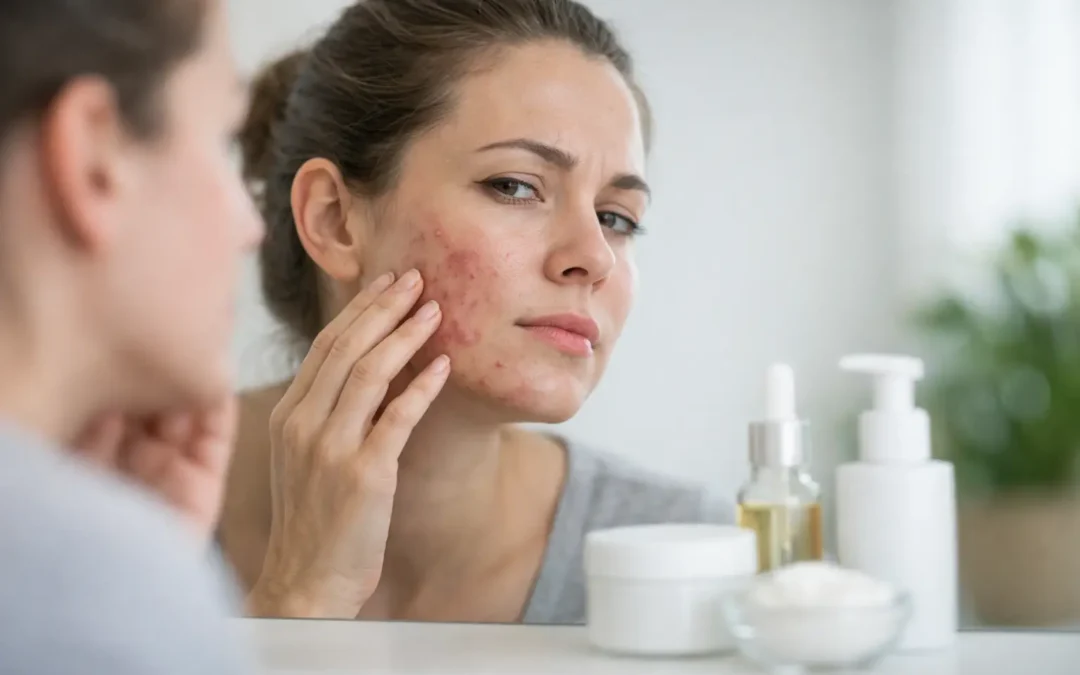
Painful, deep breakouts along the jawline, cheeks, or chin are rarely just a cosmetic nuisance. Adult cystic acne often lingers for weeks, can leave dark marks or permanent scars, and has a way of showing up at the worst possible time – before a meeting, a family event, or simply when your skin had been doing well. For many adults, it is especially frustrating because it feels out of step with age. Acne was supposed to stay in the teenage years, yet here it is again, often more stubborn and more inflammatory.
What adult cystic acne actually is
Cystic acne is a severe inflammatory form of acne that develops deeper in the skin than blackheads or small surface pimples. These lesions tend to be tender, swollen, and slow to resolve. They may not come to a visible head, which is one reason squeezing rarely helps and often makes things worse.
In adults, cystic acne commonly appears on the lower face, jawline, chin, and neck, although it can also affect the chest, back, and shoulders. Some patients break out consistently, while others notice flares around menstrual cycles, periods of stress, or changes in products and medications. The pattern matters because it helps guide treatment.
Why adult cystic acne happens
Adult acne is not caused by poor hygiene. In most cases, it develops from a combination of oil production, clogged pores, inflammation, and acne-causing bacteria. Hormones are often part of the picture, especially in women who notice cyclical breakouts or sudden acne changes in their 20s, 30s, or 40s.
Hormonal fluctuations can increase oil gland activity and contribute to the deep, inflamed lesions that define cystic acne. Stress can also play a role by influencing hormones and inflammation. Genetics matter as well. If severe acne runs in your family, you may be more likely to deal with persistent or scarring breakouts.
There are also outside triggers that can worsen the condition. Heavy or occlusive skin care products, certain hair products, friction from helmets or tight clothing, and some medications may all contribute. Even well-intentioned overuse of exfoliants can damage the skin barrier and increase irritation without controlling the deeper acne process.
Why over-the-counter products often fall short
Many adults try salicylic acid washes, benzoyl peroxide creams, acne spot treatments, and online skin care routines before they ever schedule an appointment. That makes sense. Mild acne often improves with these options. Cystic acne is different.
Because the inflammation sits deeper in the skin, over-the-counter products may not penetrate enough or may be too mild to control the underlying process. Sometimes they help reduce oiliness or prevent a few smaller breakouts, but the painful nodules continue. Other times, layering too many active products leads to dryness, peeling, and irritation, while the cysts remain unchanged.
That does not mean nonprescription care has no place. A gentle cleanser, a non-comedogenic moisturizer, and sunscreen can support acne treatment well. But when acne is painful, recurrent, and leaving marks, it usually needs a more targeted medical plan.
When adult cystic acne needs dermatology care
The timing matters more than many patients realize. If you are getting large, tender breakouts that leave scars or discoloration, it is worth seeing a dermatologist sooner rather than later. Early treatment can reduce the risk of long-term textural scarring, which is much harder to treat than active acne.
You should also seek care if your acne is affecting your confidence, interrupting your sleep because lesions are painful, or failing to improve after several weeks of over-the-counter treatment. Adult acne can have a real emotional impact. It is reasonable to treat it seriously.
Adult cystic acne treatment options
Treatment is not one-size-fits-all. The right plan depends on the severity of the acne, the location of breakouts, whether scarring is already present, your skin type, pregnancy considerations, and whether hormones seem to be driving flares.
Topical prescriptions
Prescription topical medications are often part of first-line treatment, even for deeper acne. Topical retinoids help normalize the way skin cells shed inside the pore and can reduce future clogged follicles. Prescription-strength benzoyl peroxide combinations or topical antibiotics may help calm inflammation and reduce acne bacteria. In some cases, newer topical anti-inflammatory or oil-controlling medications may be appropriate.
Topicals work best when used consistently, but they do take time. It is common to need several weeks before meaningful improvement becomes visible. They can also cause dryness or irritation at first, so the regimen has to be balanced carefully.
Oral medications
For true cystic acne, oral medication is often necessary. Oral antibiotics may be used for a limited period to reduce inflammation and bacterial overgrowth while topical treatments begin working. These are usually not a long-term solution on their own, and thoughtful prescribing matters.
For women with hormonal acne patterns, medications that address hormonal drivers can be especially effective. These may reduce oil production and lower the frequency of deep jawline or chin breakouts. This option is not right for everyone, but for the right patient, it can make a significant difference.
Isotretinoin is another important treatment for severe, scarring, or treatment-resistant cystic acne. It works by dramatically reducing oil production, preventing clogged pores, and decreasing inflammation. It is often the most effective option for persistent cystic acne, but it requires close medical supervision, discussion of side effects, and strict pregnancy precautions.
In-office treatment support
Some patients benefit from procedures that help calm large inflamed lesions or address lingering effects of acne. A dermatologist may recommend targeted injections for particularly painful cysts to help them flatten faster. Once active acne is under control, treatments for acne scars, discoloration, or texture can be considered.
That sequence matters. Trying to treat scars while new cysts are still forming usually leads to frustration. The priority is first to stop the cycle of inflammation.
Skin care habits that help, and habits that backfire
A simpler routine is often better for adult cystic acne. Gentle cleansing twice daily is usually enough. Harsh scrubs, aggressive cleansing brushes, and frequent picking can increase inflammation and raise the risk of scarring and post-inflammatory hyperpigmentation.
It also helps to choose products labeled non-comedogenic and oil-free when appropriate. Makeup does not necessarily cause acne, but heavy formulas or sleeping in makeup can worsen congestion. Hair pomades and thick oils near the hairline can contribute too.
Diet is more nuanced. Some patients notice flares associated with high glycemic foods or certain dairy products, while others do not. There is no universal acne diet, but if a pattern is clear and repeatable, it is worth discussing during a visit. The key is not to chase internet trends at the expense of evidence-based treatment.
A note on skin tone and lingering marks
For many adults, the breakout is only part of the concern. After a cyst heals, it may leave dark spots, red marks, or textural scarring that lasts much longer than the acne itself. This is especially important in patients with skin of color, where post-inflammatory hyperpigmentation can be prominent and persistent.
That is one reason early, personalized treatment matters. The goal is not only to clear active acne but also to reduce the chance of lasting visible changes. Treatment plans should consider both acne control and how to protect the skin barrier, minimize irritation, and support more even healing.
What to expect from treatment
Adult cystic acne usually improves in phases, not overnight. Pain and inflammation may start to calm first. Then the number of new lesions should decline. Residual marks often fade more slowly, and scars may need separate treatment later.
Patience is important, but so is follow-up. If a medication is too irritating, not strong enough, or not a good fit for your lifestyle, the plan can be adjusted. Good acne care is often a process of refinement rather than a single product recommendation.
At a practice such as Goodman Dermatology, that process can include evaluation of acne severity, review of hormonal or medication triggers, and a treatment plan tailored to your skin, schedule, and long-term goals. For busy adults across North Georgia, access to expert dermatology care close to home can make it much easier to stay consistent with treatment.
The bigger picture with adult cystic acne
One of the most common mistakes adults make is assuming severe acne is something they simply have to tolerate. They try to cover it, wait it out, or keep changing products every few weeks. Unfortunately, cystic acne often does not improve that way, and delay can mean more scarring.
The better approach is to treat it early, treat it thoroughly, and treat it with a plan that matches the cause. Deep acne can be medically complex, but it is also very treatable. If your skin is telling you this is more than an occasional breakout, it is worth listening – and getting care that is designed to stop the cycle, not just temporarily hide it.